As essential weighing equipment for coal mines and other industrial sites, mine explosion-proof belt scales directly affect production efficiency and operational safety. In actual operation, various factors including harsh working conditions, conveyor malfunctions and improper operation may lead to equipment faults.
Learning about typical faults and their causes, and diagnosing issues via instrument readings can effectively improve equipment stability and cut down maintenance time.
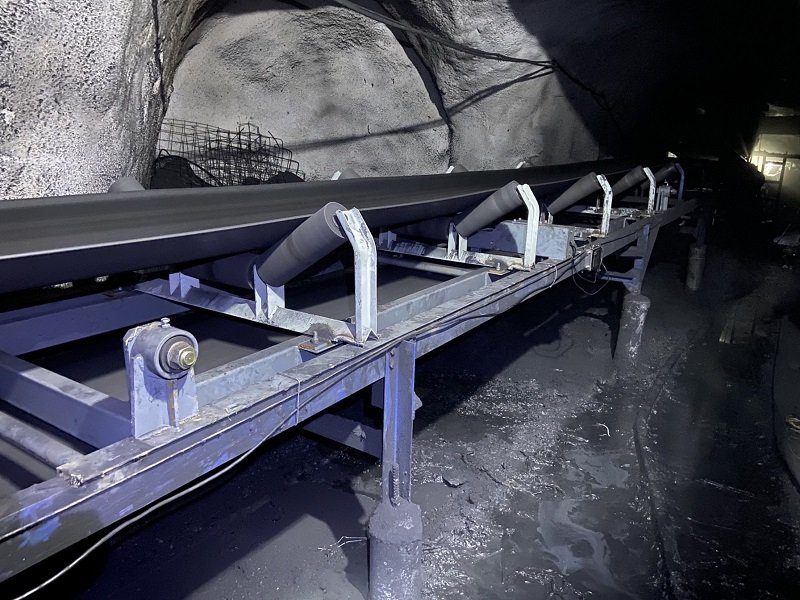
Generally, common faults of mine explosion-proof belt scales can be diagnosed according to instrument indications, which are summarized as follows:
1. No data displayed on the instrument screen
This is one of the most frequent faults. The main causes are listed below:
● Power supply issues: Loose power connections, faulty power adapters or low battery power.
● Poor cable contact: Vibration and humidity in mining areas often loosen or corrode cable connectors, resulting in interrupted signal transmission and blank screen.
● Damaged display screen: Long-term operation may cause screen failure due to overheating, aging or physical damage. Burned fuses or faulty power circuits on the main circuit board can also lead to a blank display.
2. Frequent screen refreshing and automatic restart
Continuous screen refresh or unexpected restarts indicate unstable equipment operation, mainly caused by:
● Software failures: Program errors or abnormal operation of the built-in operating system.
● Hardware malfunctions: Defects in the main control board or sensor modules.
● Unstable power supply: Power fluctuation, a common issue in mining areas, will trigger repeated restarts of the instrument.
3. Communication failure
This fault manifests as failed data transmission from sensors to the display instrument or control system, or disconnection between the instrument and upper computer. Potential causes include:
● Defective communication lines: Line aging, breakage or poor connection.
● Electromagnetic interference: Complex on-site environments and high-power electrical equipment in coal mines easily interfere with communication signals.
● Faulty communication module: Module damage caused by equipment aging or sudden failures.
4. Zero speed reading during normal operation
The speed reading reflects the running status of the conveyor belt. A zero reading under normal operation may result from:
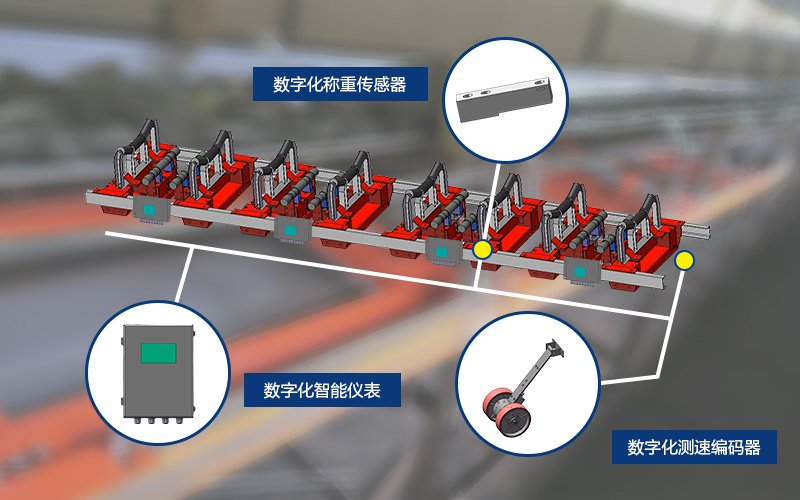
● Malfunction of the speed sensor: Failure to collect belt speed signals normally.
● Poor sensor wiring: Abnormal signal lines between the speed sensor and the instrument.
● Improper calibration: Inaccurate calibration for speed signal acquisition and processing.
5. Negative flow reading under normal load
This is a critical fault with the following possible causes:
● System zero offset error: Flow data is calculated by subtracting the zero offset from the average original signal. Incorrect zero offset settings or data deviation will lead to negative flow values.
● Damaged load cells or wrong wiring: Faulty weighing sensors or incorrect wiring cause abnormal weight signals and inaccurate flow calculation.
● Electrical interference: Interference generated by high-current equipment distorts sensor signals and data transmission.
The common faults of mine explosion-proof belt scales cover display anomalies, communication errors, abnormal speed readings and negative flow values. They are mainly attributed to poor line contact, damaged electronic components, sensor failures and incorrect parameter settings.
To ensure stable operation and accurate measurement, regular maintenance, inspection and calibration are required for timely troubleshooting. In addition, strengthening professional training for operators to improve their fault diagnosis and handling capabilities is also vital to guarantee the reliable performance of explosion-proof belt scales.