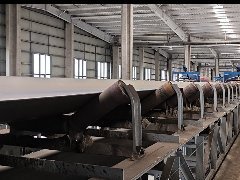
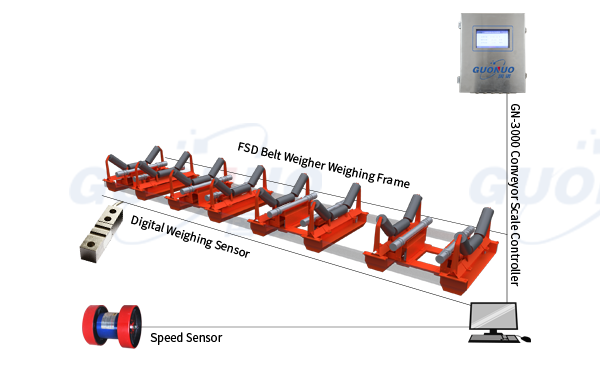
In industrial sectors such as cement, mining, power, and ports, belt conveyors play a crucial role in transporting bulk materials. Accompanying this is the demand for material measurement, especially under extreme conditions like high flow rates, significant conveyor inclination angles, stringent accuracy requirements, and harsh on-site maintenance environments, which pose daunting challenges to the selection of electronic belt scales.
Traditional scale frame structures often struggle under these challenges, experiencing issues such as accuracy drift, increased wear, and maintenance difficulties, which become bottlenecks restricting production efficiency and quality control.
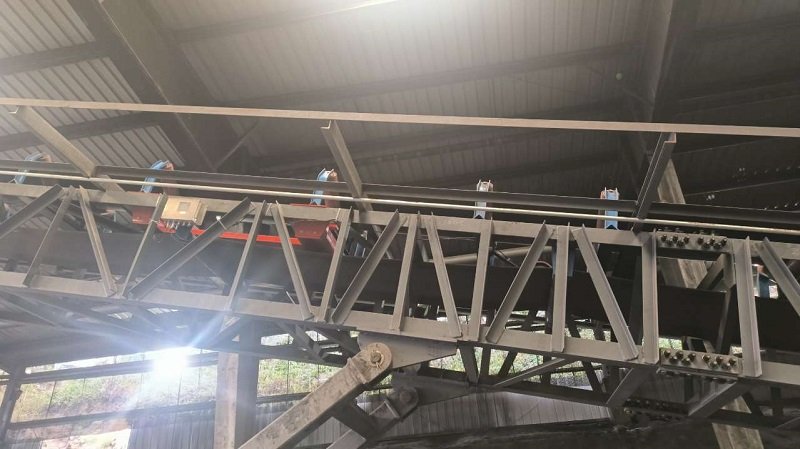
Belt Measurement Dilemma: Multidimensional Challenges Under Complex Conditions
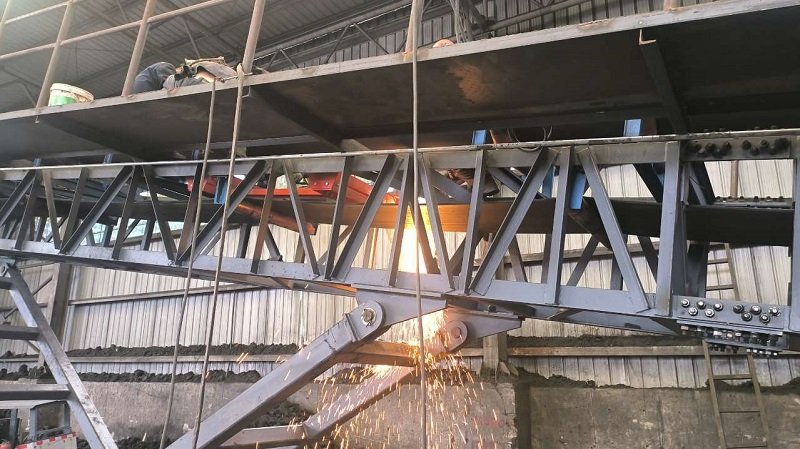
High flow rates not only exacerbate the problem of instantaneous material accumulation but also severely test the strength and stability of the scale frame structure, with tremendous impact forces potentially causing equipment deformation or even fracture.
The presence of conveyor inclination leads to a shift in the material's center of gravity, generating significant lateral forces that traditional single-point or simple lever structures struggle to effectively filter out, resulting in substantial fluctuations in measurement accuracy. Additionally, inclination increases the likelihood of belt misalignment and material slippage, further interfering with measurement stability.
The demand for high accuracy becomes even more stringent in such environments: variations in belt tension, adhesion on idlers, temperature fluctuations, and mechanical vibrations constantly challenge the stability and accuracy of measurements.
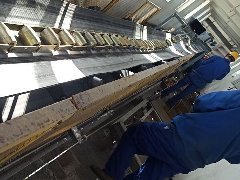
Harsh on-site conditions (high dust, humidity, confined vibration spaces) make daily maintenance and calibration arduous, with long manual operation times, high risks, and low frequencies, leading to accelerated decay in measurement accuracy due to the lack of timely calibration.
Solution: High-Precision Electronic Belt Scale with Automatic Online Calibration (Modular Composite Scale Frame)
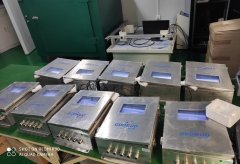
Facing these dilemmas, Guonuo Technology has introduced an innovative solution that integrates core technological advancements: a high-precision electronic belt scale equipped with a modular composite scale frame and automatic online calibration functionality. Its core advantages lie in:
1. Modular Composite Scale Frame:
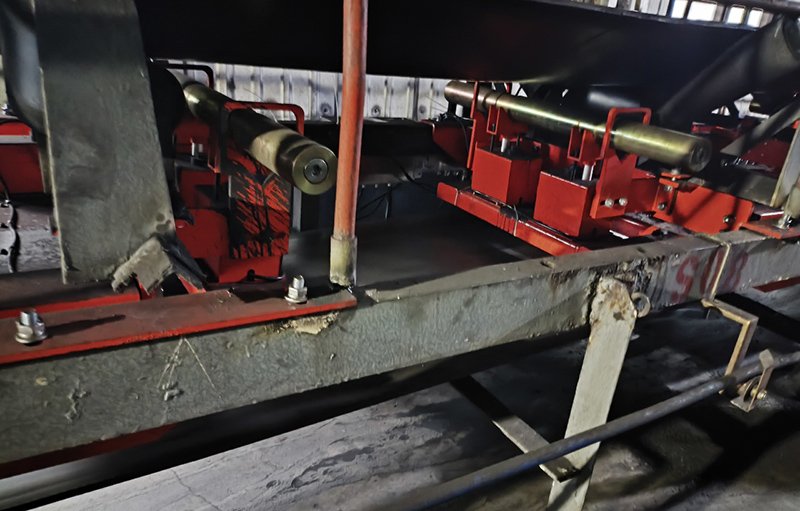
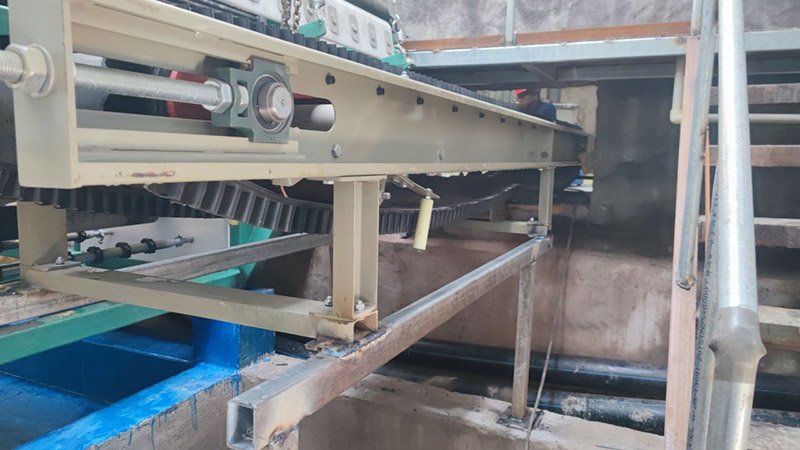
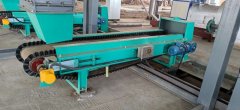
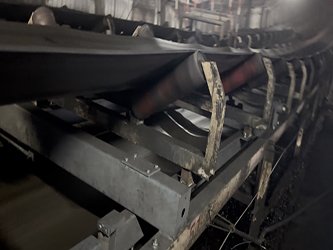
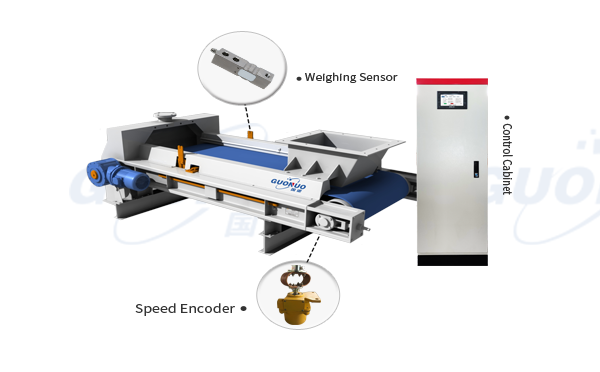
- Exceptional Stability and Anti-interference Capability: The scale frame consists of multiple tightly arranged independent weighing modules forming a rigid measurement entity. Each module accurately senses its load, and multiple sensors work collaboratively, exhibiting strong "collective anti-interference" capabilities. Even under high-flow impacts or lateral forces induced by inclination, the overall deformation of the scale frame is minimal, ensuring stable and reliable measurement values.
- High-Precision Foundation: Multiple sensors share the load, significantly reducing the burden on individual sensors and enhancing system sensitivity and measurement resolution. Its structural design (e.g., the "floating" concept) effectively isolates external interferences such as belt tension variations and mechanical vibrations, laying the foundation for high-precision measurement.
- Maintenance Convenience: The modular design allows for quick replacement of individual sensors or components without requiring the entire scale frame to be disassembled. This not only substantially reduces downtime but also lowers the technical difficulty and labor costs of maintenance, making maintenance work feasible in narrow, dusty environments.
- Inclination Adaptation: Unique structural design and precise installation techniques ensure that the scale frame remains level on inclined belts, with sensor force directions perpendicular, effectively counteracting the adverse effects of inclination on measurements.
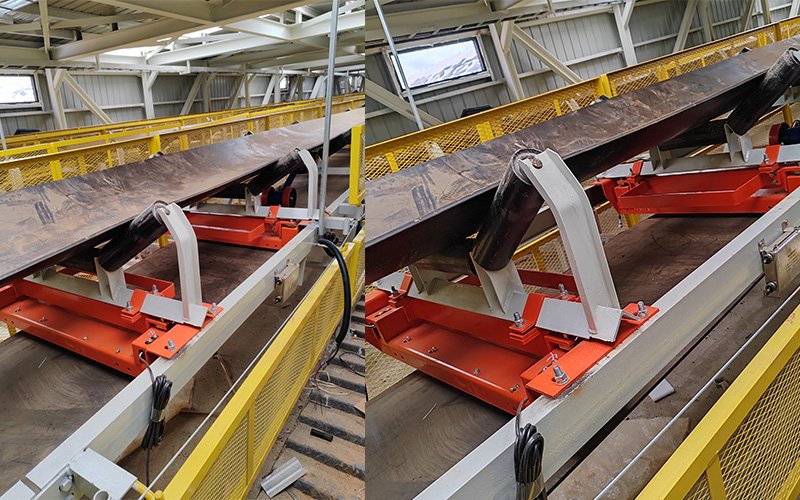
2. Automatic Online Calibration:
- Closed-Loop Accuracy Guarantee: This is the core weapon against accuracy drift under harsh conditions. The modular scale frame integrates standard barcodes, and combined with intelligent instrument algorithms, can automatically trigger the calibration process during belt operation.
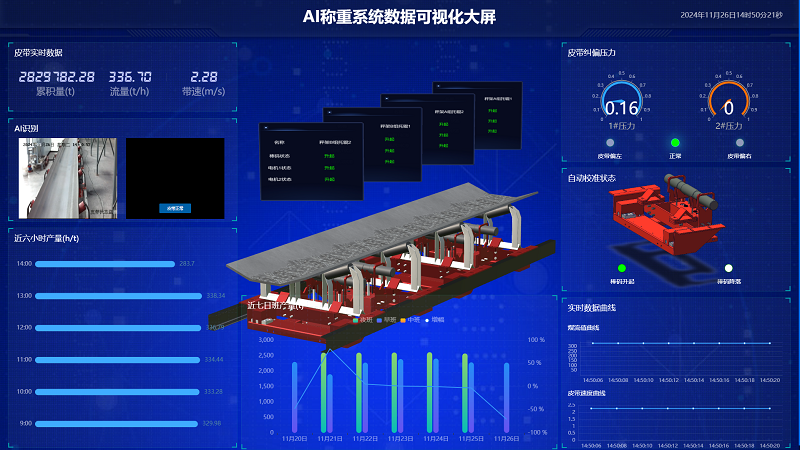
- Real-Time Dynamic Compensation: The system automatically analyzes measurement results and calculates and corrects errors in real-time (e.g., zero points, span coefficients). This is equivalent to installing an ever-vigilant "precision monitor" for the electronic belt scale, dynamically offsetting accuracy losses caused by factors such as tension variations, temperature drift, and wear.
- Revolutionary Maintenance Simplification: It completely avoids high-risk, high-cost, and low-efficiency manual hanging code or physical calibration processes. Maintenance personnel stay away from dangerous areas, and the system automatically completes calibration according to preset strategies or triggering conditions without requiring production stops, significantly improving calibration frequency and timeliness, and ensuring long-term accuracy stability.
- Data-Driven Decision Making: The automatic calibration process generates detailed calibration reports and historical data, providing strong data support for equipment condition monitoring, preventive maintenance, and process optimization.
Under multiple stringent conditions such as high flow rates, significant inclination angles, high accuracy requirements, and difficult maintenance, traditional electronic belt scales are no longer adequate. Adopting a high-precision electronic belt scale with a modular composite scale frame and integrated automatic online calibration functionality represents a cutting-edge solution direction.
Its exceptional structural robustness, anti-interference capabilities, precise measurement performance, and especially the "intervention-free" accuracy guarantee and revolutionary maintenance simplification brought by automatic online calibration make it a reliable cornerstone for overcoming extreme measurement challenges and achieving efficient and lean production.