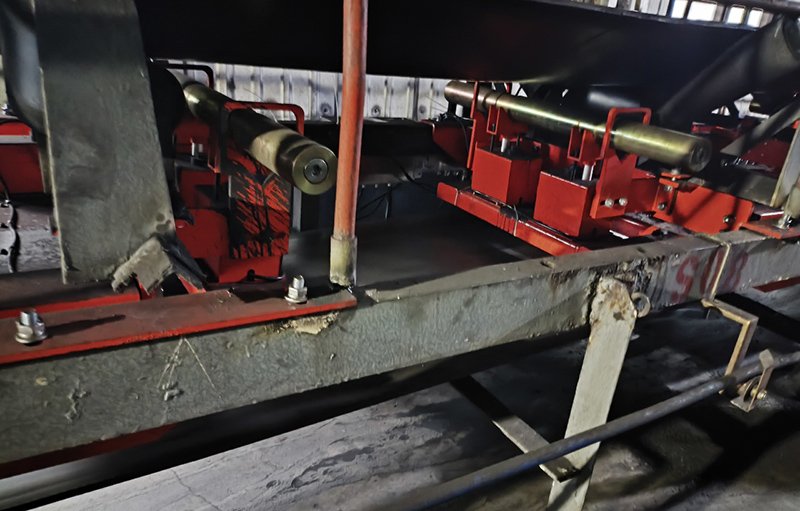
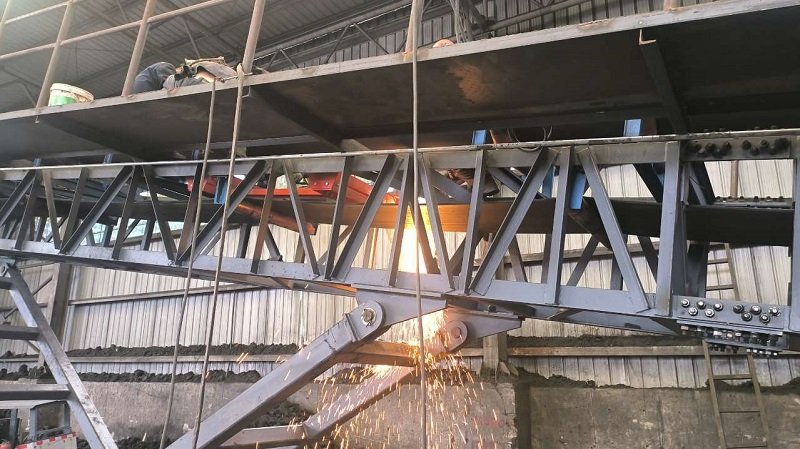
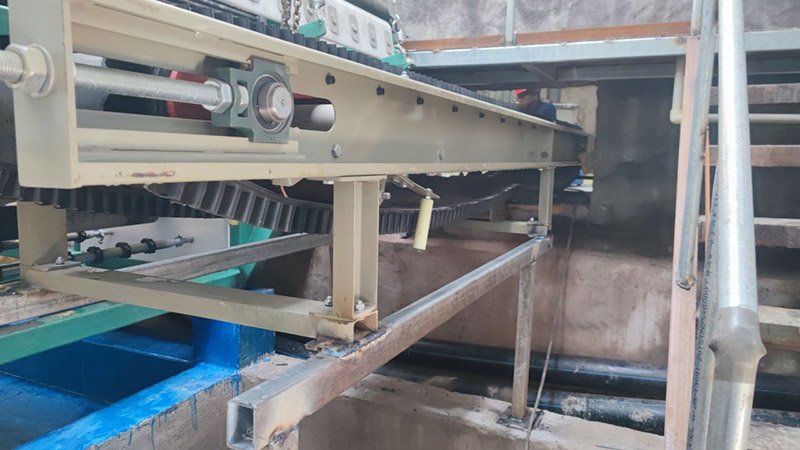
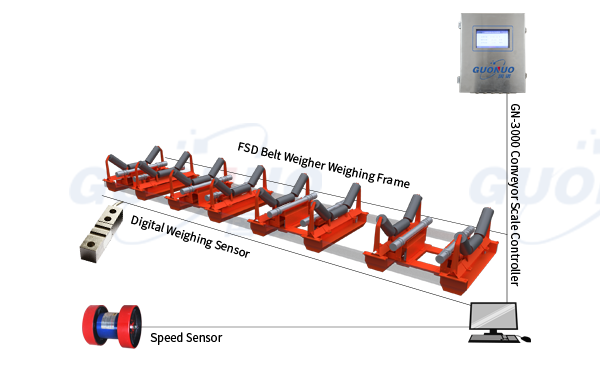
In modern industrial production, electronic belt scales have become indispensable due to their precise weighing capabilities and efficient operational performance in material conveying, production monitoring, and quality control. As technology continues to advance, the technology of electronic belt scales is also constantly evolving, achieving higher precision, stronger intelligence, and more flexible applications.
Since the mid-20th century, when electronic technology was introduced into the weighing field, electronic belt scales have gradually replaced traditional mechanical belt scales and become the mainstream choice for industrial bulk material measurement.
Early electronic belt scales primarily relied on analog signal processing technology. With the continuous maturation of microprocessors, sensor technology, and digital signal processing technology, electronic belt scales have significantly improved in terms of accuracy, stability, and intelligence.
In recent years, the integration and application of technologies such as the Internet of Things (IoT), big data, and cloud computing have further breathed new life into electronic belt scales, diversifying their functions and expanding their application scenarios.
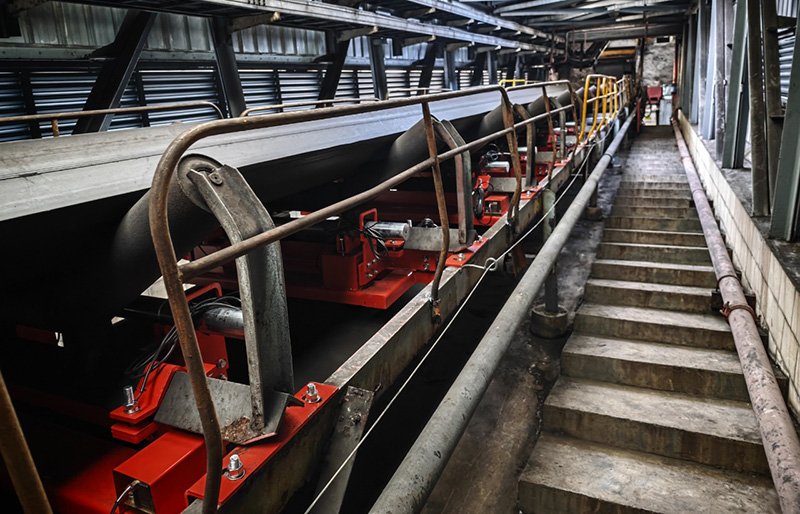
The development trends of electronic belt scale technology are mainly reflected in the following aspects:
1. More Flexible Modular and Combinatorial Scale Frame Structures:
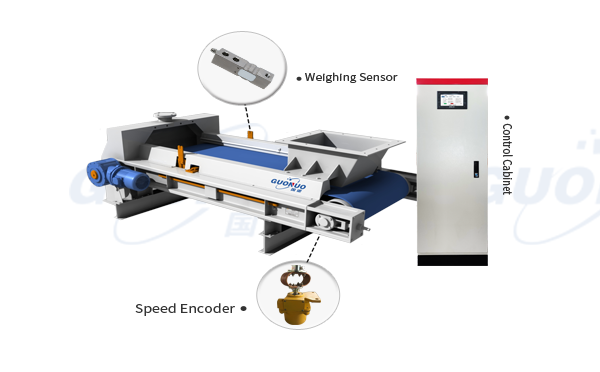
Modern electronic belt scales are increasingly designed with modular and combinatorial structures. The advantages of this design lie in its flexibility and convenience for maintenance, replacement, and overall device scalability.
Modular design allows belt scales to be flexibly combined and adjusted according to different application requirements, simplifying the subsequent maintenance, replacement, and upgrade processes.
Additionally, this structure supports various functional expansions, such as adding sensors or optimizing control systems, to meet different application environments, production conditions, and process requirements.
2. More Accurate Digital Signals:
With the progress of digital signal processing technology, the weighing accuracy of electronic belt scales has significantly improved.
Advanced digital sensors can collect and process weighing signals in real-time, reducing interference and errors during signal acquisition and transmission, and enhancing data accuracy.
Furthermore, digital signals facilitate subsequent data processing and analysis, making weighing results more reliable and capable of meeting increasingly stringent precision requirements.
3. More Intelligent High-Performance Digital Instruments:
As the core component of electronic belt scales, digital instruments are becoming increasingly intelligent. Modern high-performance digital instruments not only possess stronger data processing capabilities and more intuitive human-machine interfaces but also provide diagnostic analysis results for maintenance.
By integrating advanced algorithms and artificial intelligence technologies, digital instruments can automatically adjust weighing parameters, optimize overall weighing performance, and enhance the stability and reliability of the measurement system.
4. More Reliable Redundancy Design:
To ensure the stability and reliability of electronic belt scales in various environments, redundancy design has gradually become an important development trend. Redundancy design includes multiple sensor configurations, backup power systems, and data backup mechanisms.
This design can automatically switch to a backup system in the event of a system failure, thereby avoiding data loss caused by abnormal conditions such as power outages and ensuring high system availability and data integrity.
5. More Intelligent Automatic Real-Time Monitoring and Online Calibration:
Traditional electronic belt scales require regular manual calibration as a maintenance measure. In contrast, modern electronic belt scales incorporate intelligent real-time monitoring and automatic online calibration technologies.
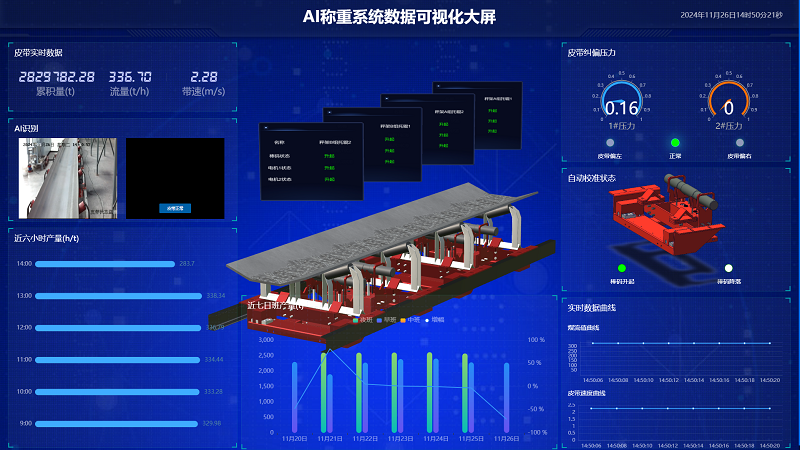
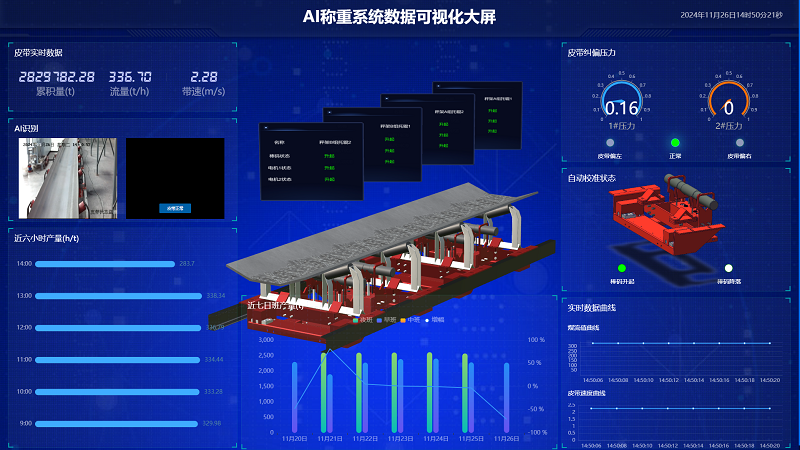
The instrument's built-in automatic calibration algorithm uses AI image recognition, laser technology, and other methods to identify belt operation conditions, material accumulation situations, and compare them with the belt scale's measured values, automatically completing the calibration process.
This achieves continuous precision maintenance of the weighing system, reduces manual intervention, maintains production continuity, and improves system operational efficiency and accuracy, especially in complex and dynamic production environments.
6. More Efficient Networked Operation and Maintenance Methods:
The application of IoT technology enables electronic belt scales to achieve remote monitoring, debugging, maintenance, and diagnosis functions. Operators can monitor and operate the equipment in real-time and predict equipment operation through network connections, significantly reducing on-site maintenance labor and time costs.
Networked operation not only improves maintenance efficiency but also facilitates data analysis and system optimization.
New technologies are leading electronic belt scale technology to new heights. Through continuous innovation and application in modular and combinatorial structures, digital signal processing, intelligent digital instruments, redundancy design, automatic real-time monitoring and online calibration, and networked operation and maintenance, electronic belt scales will better meet the needs of modern industrial production and become a strong technical support for enterprises' intelligent transformation and sustainable development.