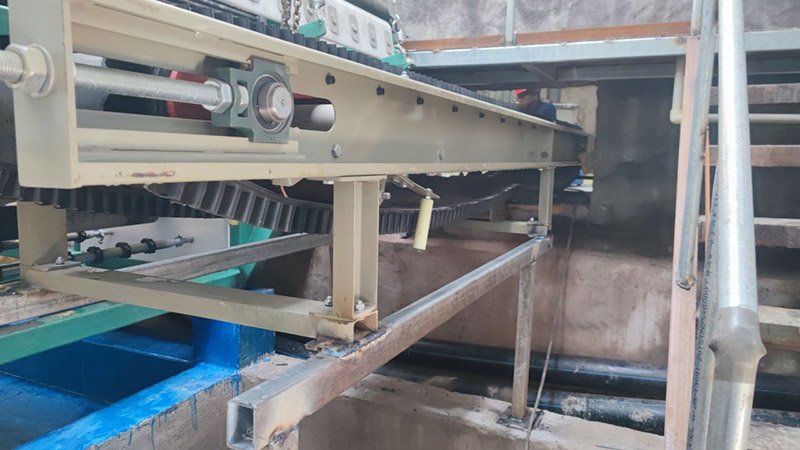
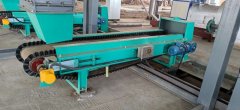
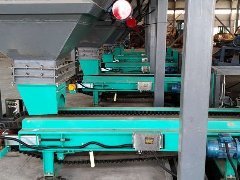
As global industrialization advances, modern large-scale production imposes increasingly stringent requirements on various mechanical equipment, particularly in the areas of material conveying and batching. As an essential feeding device in industrial automated production, the performance and functionality of automatic quantitative feeders directly impact the precision, continuity, and cost control of production processes.
Modern industrial mass production is characterized by scalability, intelligence, and efficiency, demanding equipment that achieves low error rates, low energy consumption, and high stability during high-speed operation. By integrating sensing technology, automation control, and precision mechanical structures, automatic quantitative feeders have become core equipment in the material conveying and proportioning segments of modern production lines, with design philosophies and functional characteristics that fully meet the rigorous demands of industrial production.
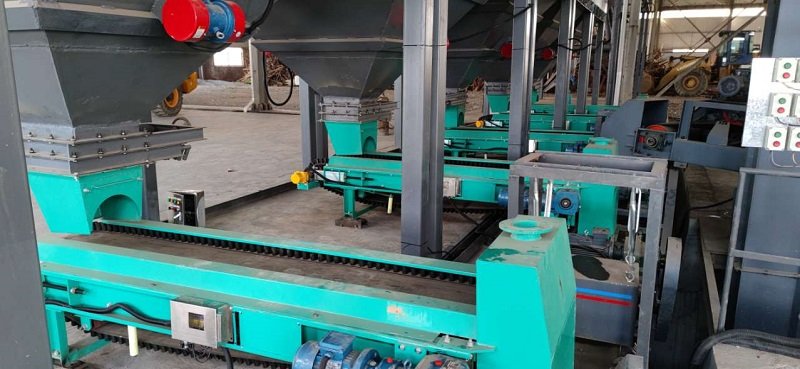
Characteristics of automatic quantitative feeders that meet the requirements of modern industrial mass production:
1. High Weighing Accuracy:
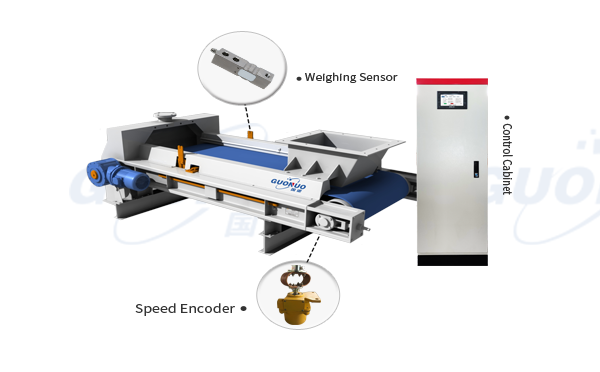
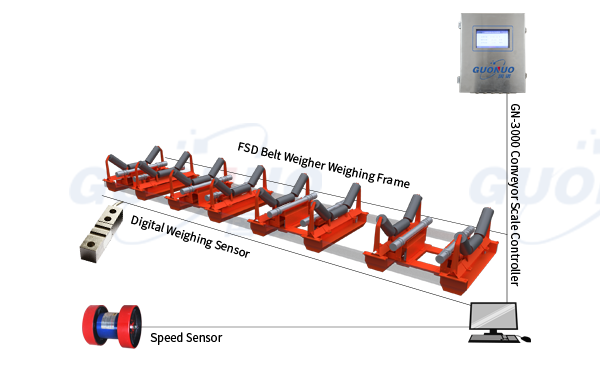
Utilizing high-sensitivity sensors and dynamic compensation algorithms, along with digital signal processing technology, quantitative feeders can monitor material weight in real-time during high-speed operation, with errors controlled within extremely narrow ranges. This ensures consistent batching and avoids product quality fluctuations caused by weighing deviations.
2. High Linearity in Material Conveying:
The linearity of material conveying directly affects production efficiency. Quantitative feeders employ optimized mechanical transmission designs combined with closed-loop control systems to ensure stable material conveying speeds and uniform flow rates, reducing production interruptions or raw material waste caused by sudden speed changes.
3. High Equipment Automation Level, Meeting Automated Production Requirements:
Automatic quantitative feeders achieve full-process automation control through PLCs (Programmable Logic Controllers) or industrial computers, enabling seamless integration with other equipment on the production line. This reduces manual intervention, meets the demand for 24-hour continuous operation, and significantly enhances production rhythm.
4. High System Feeding Accuracy:
Based on high-precision measurement and reliable PLC control, quantitative feeders employ multi-level feedback adjustment mechanisms to dynamically adjust feeding rates and quantities according to preset parameters. Even in the face of varying material flows, they maintain high feeding accuracy, ensuring process stability.
5. Simple Operation:
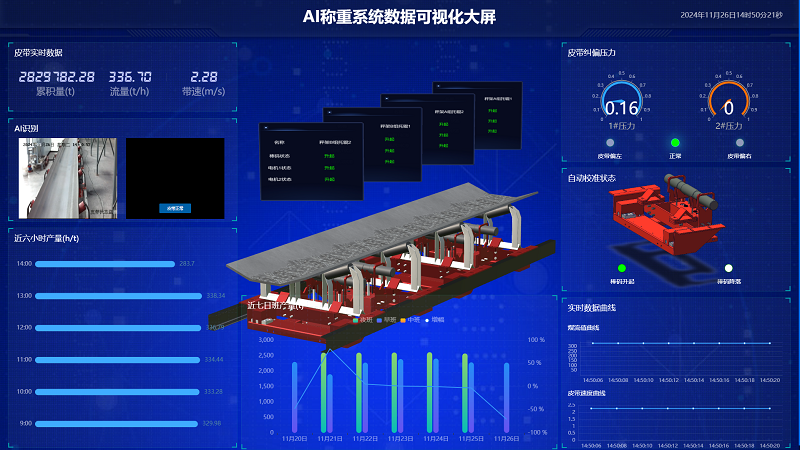
The intuitive design of the human-machine interface (HMI) allows operators to quickly set parameters and monitor operating status via touchscreens or remote terminals, reducing training costs and the risk of operational errors.
6. Strong Maintainability:
A modular design philosophy permeates the structure of quantitative feeders, with key components supporting rapid disassembly and replacement. Additionally, intelligent diagnostic systems can monitor equipment health status in real-time, providing early fault warnings and minimizing downtime for maintenance.
7. Powerful and Comprehensive Functions:
Modern quantitative feeders not only possess basic weighing and conveying functions but can also integrate extended functions such as temperature monitoring, material blockage prevention warnings, and data traceability, meeting the needs of diverse production scenarios and facilitating enterprise intelligent upgrades.
8. Reasonable Investment Structure:
Automatic quantitative feeders strike a balance between initial investment and long-term operating costs. Their high reliability reduces maintenance expenses, while improved production efficiency and raw material utilization further dilute comprehensive costs, providing enterprises with a cost-effective solution.
9. Complete System with Wide Adaptability:
From powders and granules to block materials, the equipment can be configured with flexible sensors, conveying mechanisms, additional devices, and control programs to adapt to different materials, production conditions, and production capacities. Furthermore, their standardized interface designs facilitate integration with upstream and downstream equipment, forming an efficiently collaborative production system.
With core advantages such as high precision, high automation, and easy maintenance, automatic quantitative feeders have become indispensable key equipment in modern industrial mass production. Their technical characteristics not only meet current industrial pursuits of efficiency and quality but also provide a solid foundation for the evolution of future intelligent and flexible production models.