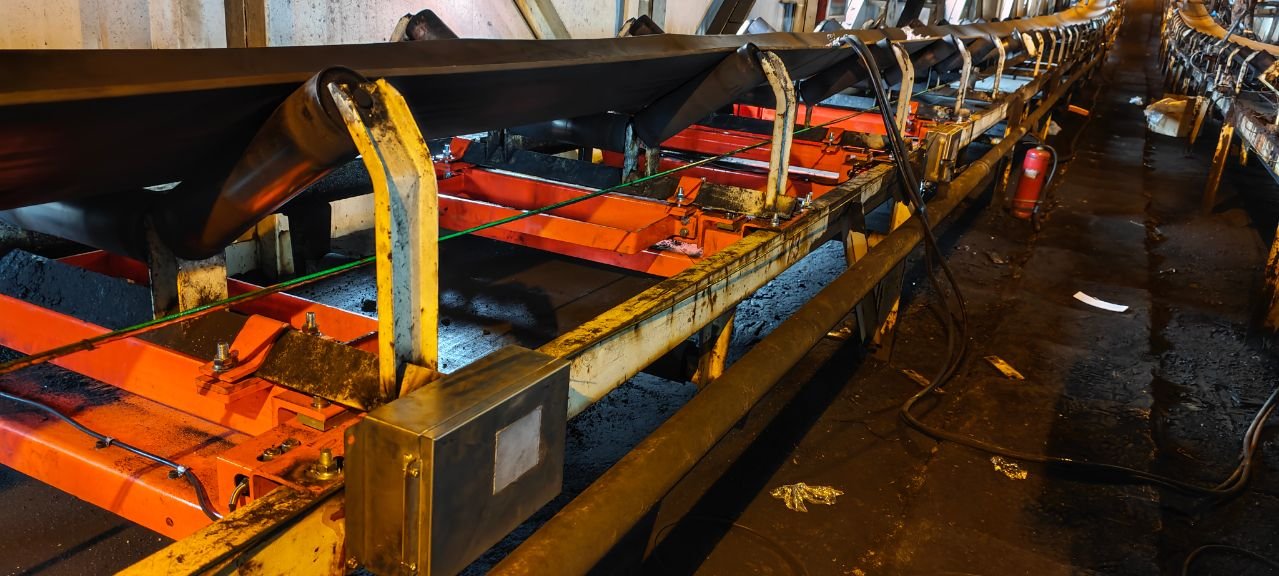
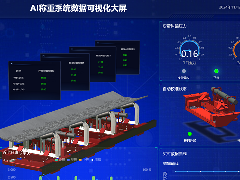
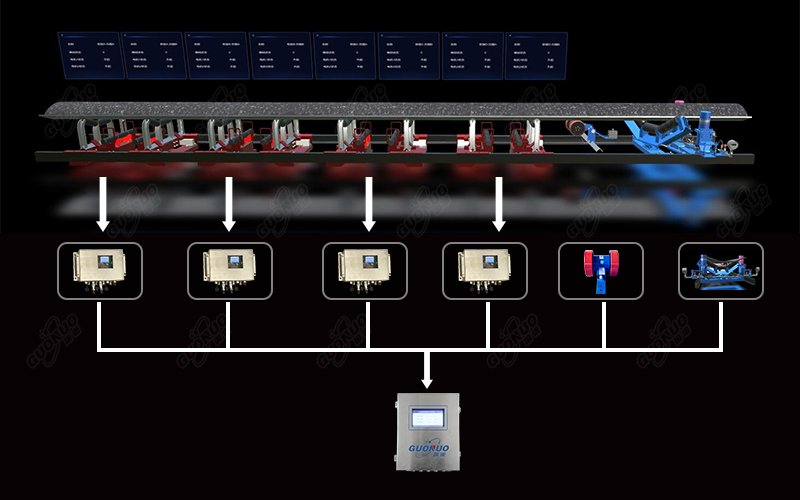
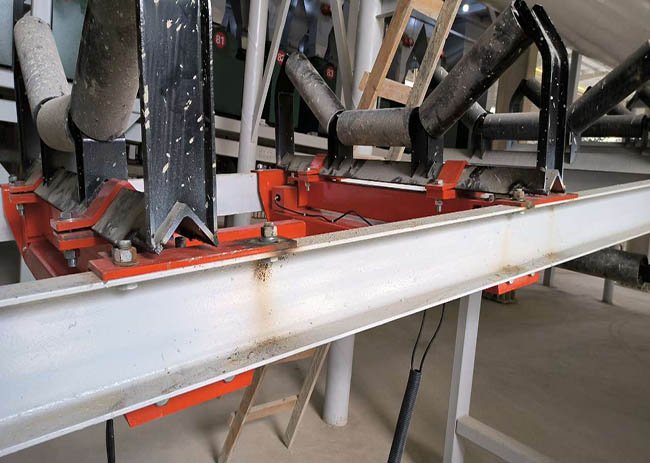
Driven by the wave of Industry 4.0, traditional industrial equipment is undergoing a qualitative transformation from "tool attributes" to "intelligent agent attributes." As the core equipment in the field of bulk material measurement, electronic belt scales, through deep integration with AI technology, not only overcome traditional pain points such as precision fluctuations, high reliance on manual operations, and numerous management blind spots but also reconstructed the functional boundaries and management paradigms of industrial measurement, achieving disruptive innovation with a "1+1>2" effect.
I. AI Technology Reconstructs Measurement Accuracy: From Passive Collection to Active Optimization
Traditional electronic belt scales have long faced challenges from complex operating conditions such as belt tension variations, uneven material distribution, and environmental vibration interference, leading to prevalent issues of large and fluctuating measurement errors. The introduction of AI technology, through the synergy of deep learning algorithms and machine vision, constructs a closed-loop system of "perception-analysis-response":
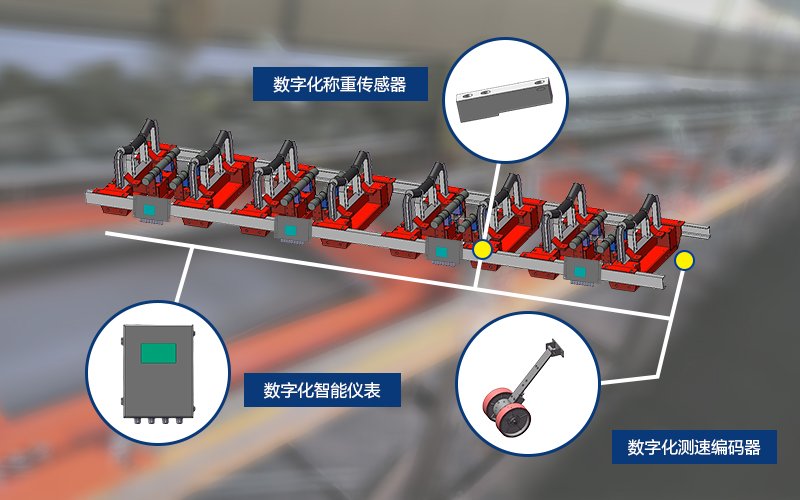
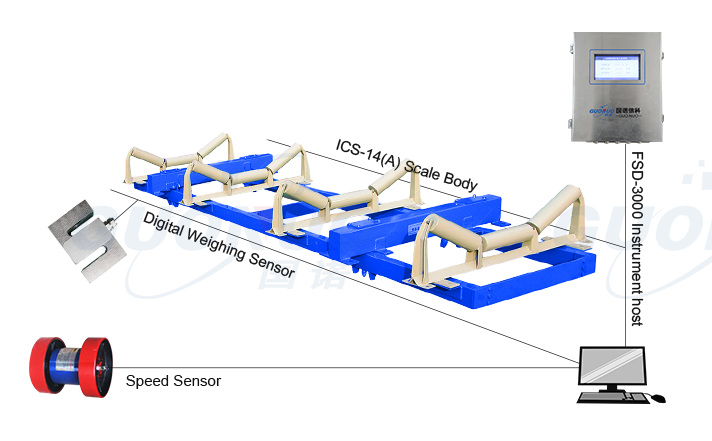
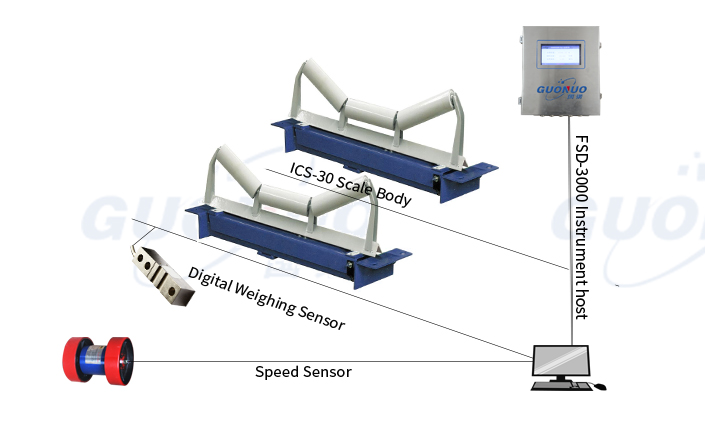
- Multi-dimensional Data Real-time Capture: By integrating high-precision weighing sensors, dynamic speed measurement modules, and AI cameras, the system can simultaneously collect multi-dimensional parameters such as material weight, speed, distribution uniformity, and belt offset, with data acquisition synchronized in real-time with operation.
- Dynamic Error Compensation: Based on deep learning models trained on millions of operating condition datasets, AI can instantly identify abnormal states such as belt deviation, material accumulation, and temperature drift, automatically adjusting measurement parameters and performing error compensation. This not only enhances measurement accuracy and stability but also improves environmental adaptability.
- Self-calibration and Correction Capabilities: Unlike traditional devices that require manual shutdown for calibration, AI-enabled smart belt scales achieve automatic online calibration through hardware standard barcodes and built-in algorithms. While measuring, the system continuously monitors measurement results and zero points, completing high-precision calibration through mutual calibration between front and rear units and AI image analysis assistance, significantly improving efficiency and eliminating the need for production shutdowns.
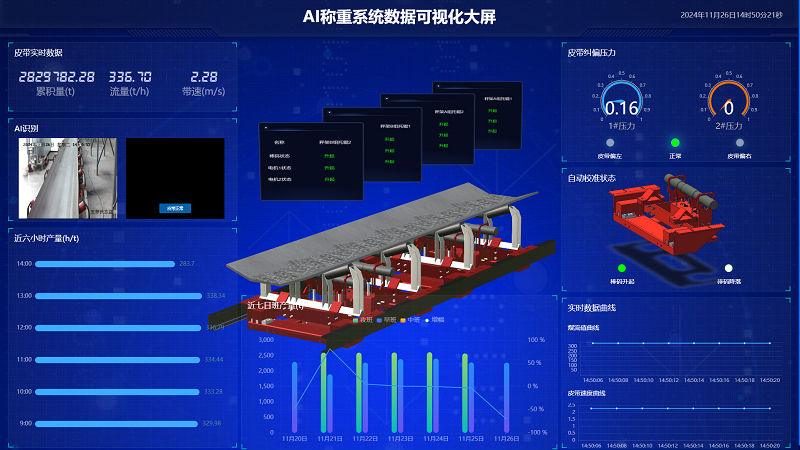
II. Management Paradigm Upgrade: From Isolated Devices to Intelligent Neural Nodes
AI technology endows electronic belt scales with "cognitive subject" attributes, transforming them into decision-making hubs within production systems:
- Predictive Maintenance System: By analyzing historical sensor data and real-time operating parameters, AI can predict risks such as weighing sensor failures and belt tears in advance, thereby reducing unplanned downtime and saving maintenance costs.
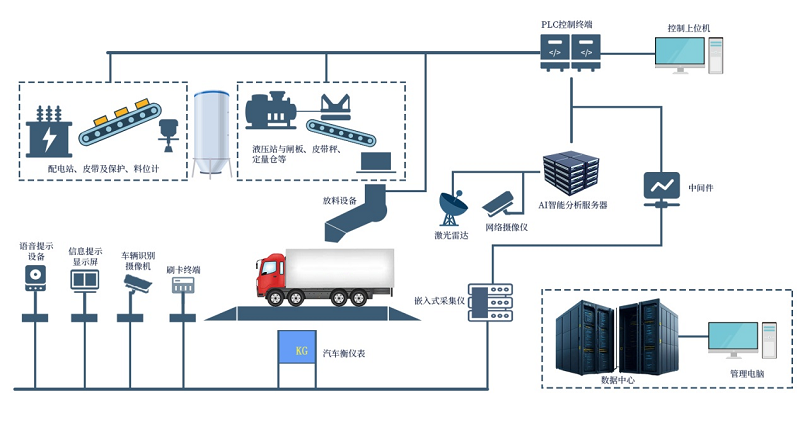
- Remote Collaborative Management: Leveraging 5G + Industrial Internet platforms, managers can monitor the measurement data of belt scales on all conveyor lines across various branches in real-time via mobile terminals. Digital twin technology further supports remote diagnostics, enabling engineers to resolve a significant portion of faults without on-site visits.
- Global Optimization Decision-making: The system deeply integrates measurement data with production plans and equipment health records to form a dynamic optimization model.
The deep fusion of AI technology with electronic belt scale hardware enables the advantages of both to multiply beyond simple addition, producing a synergistic effect akin to a chemical reaction: electronic belt scales provide precise physical "sensory organs," while AI endows them with a powerful "thinking brain" and an "adaptive nervous system."
Together, they achieve a "1+1>2" application effect—measurement accuracy surpasses traditional technological ceilings, system stability remains resilient in the face of disturbances, and long-term maintenance requirements are significantly reduced, providing an unprecedented reliable foundation for refined management and transparent control of production processes.