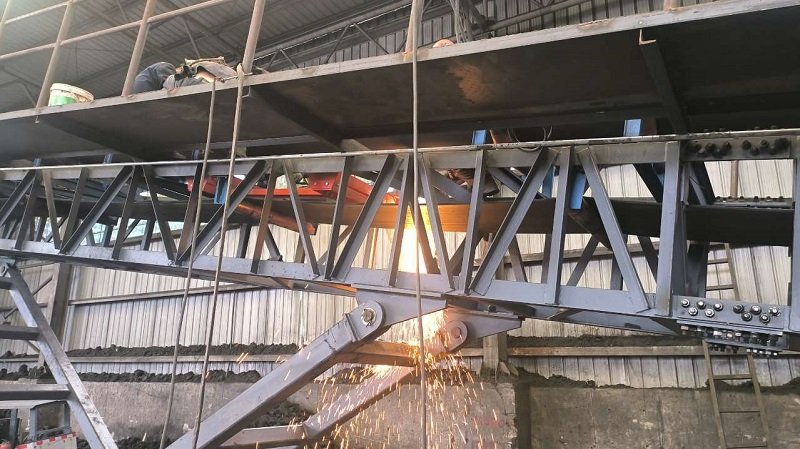
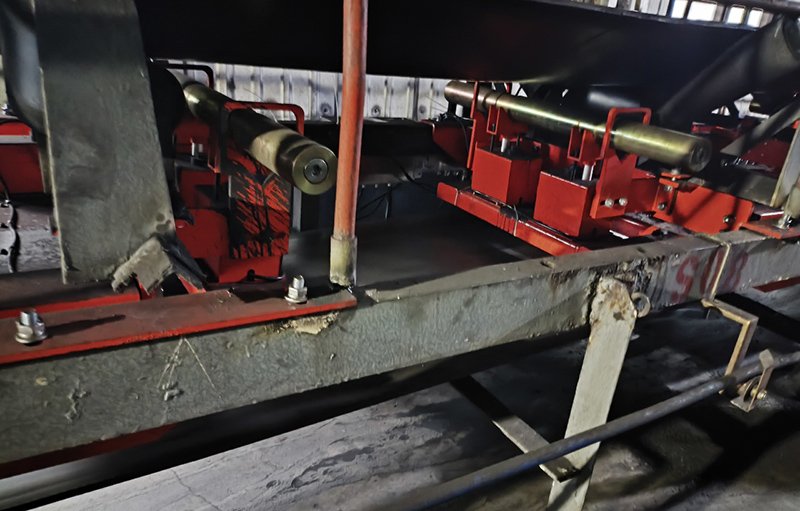
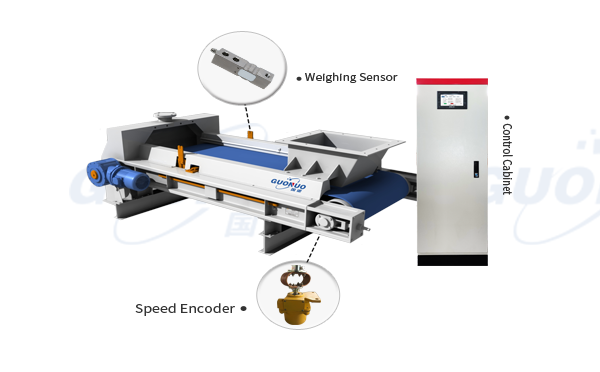
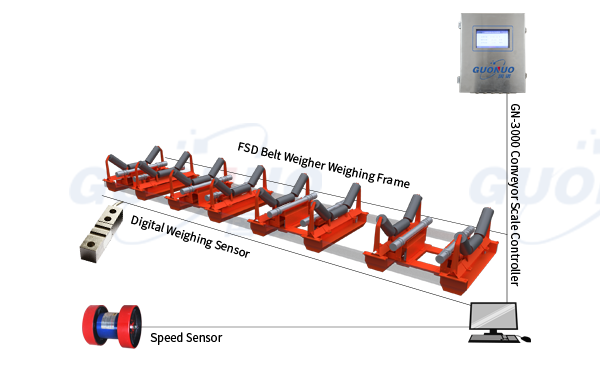
In industrial production processes, electronic belt scales are used for automated weighing and measurement during material conveyance, with their accuracy and stability directly influencing cost accounting, quality control, and even trade settlement accuracy. The frame structure, as the physical load-bearing core of the belt scale, determines whether the belt scale can continuously and accurately operate in complex and variable industrial site environments when selected appropriately.
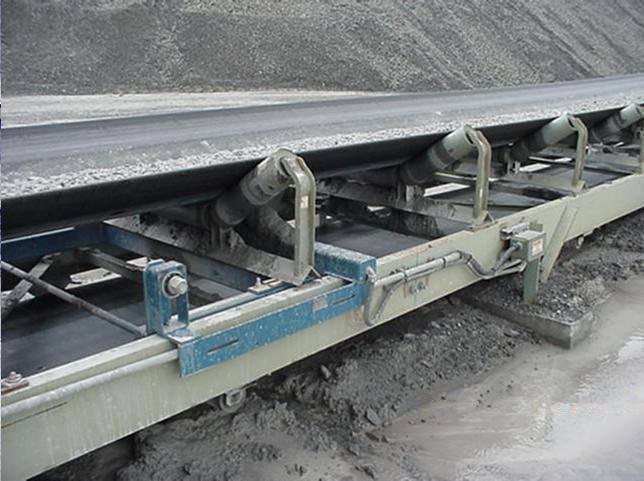
I. Mainstream Electronic Belt Scale Frame Structures and Their Characteristics
1. Single Idler Direct Load-Bearing Frame:
Structure: Only one weighing idler is directly mounted on the load cell.
Advantages: Simplest structure, lowest cost, and easy installation.
Disadvantages: Single load point, highly sensitive to belt tension changes; relatively poor accuracy (typically 0.5%-1.0%) and stability; difficult to effectively filter out interference from belt misalignment and material off-center loading.
Typical Applications: Internal process monitoring with low accuracy requirements, non-critical measurement points, budget-constrained scenarios, and situations involving low-value materials.
2. Suspended Frame:
Structure: The entire weighing area (including multiple idlers) is integrated as a module and suspended on multiple load cells (commonly 2-4) via lever or direct connections. The lever structure helps balance belt tension.
Advantages: Relatively high accuracy (typically 0.25%-0.5%) and good stability; effectively overcomes some belt tension changes, misalignment, and material off-center loading; relatively sturdy structure.
Disadvantages: More complex structure than single idler, higher cost and installation requirements; higher demands on installation foundation and leveling.
Mainstream Types: Dual-lever multi-idler, single-lever multi-idler (e.g., ICS-14, ICS-17), and leverless multi-idler (e.g., ICS-30). More idler groups (commonly 2-4) and longer measurement sections generally result in better accuracy, stability, and filtering effects on belt fluctuations.
Typical Applications: Suitable for most industrial scenarios with moderate accuracy requirements, widely used in industries such as coal, power, building materials, chemicals, and food for raw material and product measurement.
3. Fully Suspended Frame:
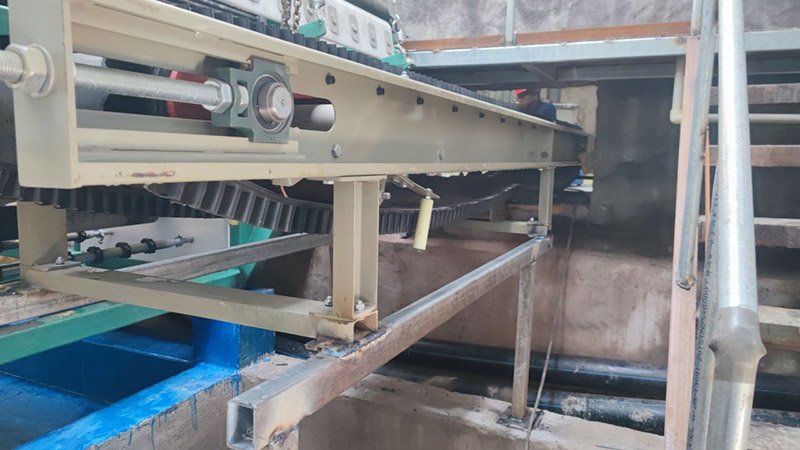
Structure: Takes the suspended frame concept to the extreme, with a longer measurement section (more idler groups, such as 4-8 or more), and the entire frame as a rigid unit typically supported directly by 4 or more high-precision load cells, fully suspended.
Advantages: Highest accuracy (up to 0.2%-0.25% or even higher) and excellent stability; exceptional filtering effect due to the ultra-long measurement section, maximizing resistance to belt tension changes, misalignment, material off-center loading, and vibration; extremely rigid structure. Some high-end models use rectangular steel tube integral welding or precision cast steel.
Disadvantages: Most complex structure and highest cost; extremely strict requirements on installation foundation and construction precision; relatively large weight and volume.
Typical Applications: High-precision trade settlements (e.g., port ship loading, import/export measurement), critical process control points highly sensitive to costs, and scenarios demanding the highest measurement reliability.
II. Key Steps and Practical Suggestions for Selection
1. Clearly Define Requirements: Accuracy targets, material types, flow ranges, belt conveyor parameters (belt width, inclination angle, speed), and primary purposes (trade? control? monitoring?).
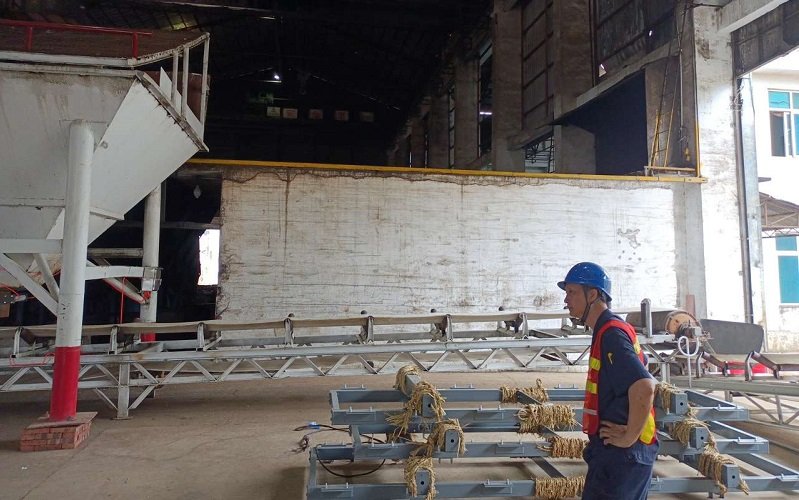
2. Conduct In-Depth Site Surveys: Measure installation space (length, width, height limitations) on-site, observe belt operating conditions (tension, misalignment, vibration), and assess environmental conditions (temperature, humidity, dust, moisture, corrosion).
3. Precisely Match Working Conditions:
For high-precision trade settlements in harsh environments? Fully suspended frames, especially combined fully suspended frames, are usually the top choice.
For controlling material feed in space-constrained renovation projects? Single idler frames offer significant advantages; if higher accuracy is required, single idler combined structures can be considered.
For moderate accuracy requirements in general industrial scenarios? Suspended frames (dual or multi-idler) are cost-effective and reliable solutions.
For internal flow monitoring with limited budgets? Single idler frames can serve as a starting point for consideration.
4. Pay Attention to Details and Quality:
Material and Protection: Ensure frame materials (e.g., carbon steel, stainless steel) and surface treatments (e.g., galvanizing, spraying) meet requirements for abrasive, corrosive, and impact-prone working conditions. Load cell and instrument protection levels (IP65 or above) should match the environment.
Installation Foundation: Especially for suspended and fully suspended frames, a stable, level, and rigid installation foundation is fundamental to accuracy. Strictly adhere to manufacturer installation specifications.
Manufacturer Reputation and Service: Choose suppliers with strong technical capabilities, rich experience, and the ability to provide professional on-site support (installation guidance, commissioning, calibration, training) and reliable after-sales service.
System-Wide Consideration: The frame must work in coordination with load cells, speed sensors, and integrator instruments. Ensure overall system compatibility and optimal performance.
Selecting the appropriate electronic belt scale frame structure is far from a simple comparison of specifications; it requires an in-depth dialogue with complex working conditions. A profound understanding of the core principles, advantages, and limitations of different structures, combined with a comprehensive assessment of material characteristics, site environments, accuracy requirements, and maintenance costs, is essential to optimize device performance. Ignoring working condition adaptability renders even the most expensive equipment unable to guarantee measurement accuracy.