In industrial production, as the core of dynamic weighing equipment, the performance stability and user experience of belt scales not only affect users' production and management but also influence the manufacturer's reputation and image. To comprehensively enhance the performance and user experience of belt scales, belt scale manufacturers need to implement a series of scientifically effective measures across design, manufacturing, installation, maintenance, and other aspects.
1. Technological Innovation Drives Breakthroughs in Accuracy and Stability
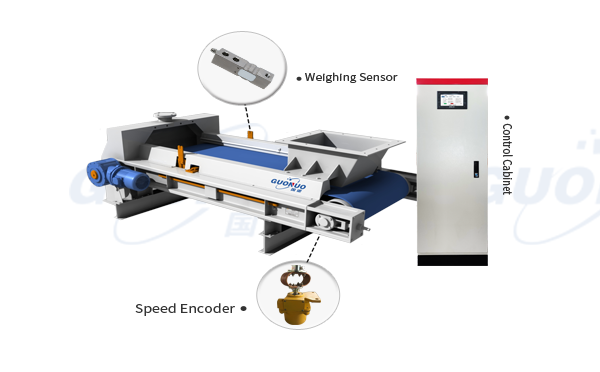
The core value of belt scales lies in high-precision measurement under long-term stable operation. Manufacturers should focus on upgrading sensor technology, such as developing sensor systems that are resistant to temperature drift, vibration interference, and digital processing, and reducing the impact of environmental factors on accuracy through adaptive calibration algorithms.
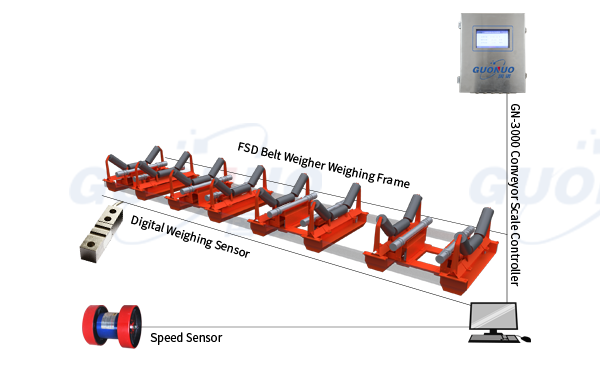
Additionally, multi-sensor fusion technology can be introduced to monitor parameters like belt tension and speed in real-time, dynamically correcting weighing errors. For mechanical structures, modular design reduces installation complexity, while the application of high-wear-resistant materials effectively extends the service life of key components. Furthermore, digital twin technology can simulate equipment operation status, providing data support for design optimization.
2. Intelligent Upgrades Reconstruct Equipment Management Modes
In the era of Industry 4.0, the intelligence level of belt scales directly affects their market competitiveness. Integrating IoT modules enables remote monitoring and fault warnings, helping users stay informed about equipment health status in real-time.
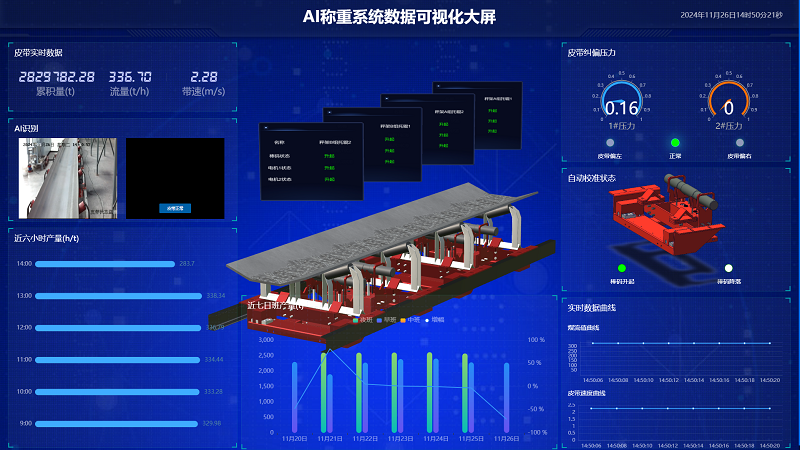
Developing diagnostic systems with self-learning capabilities can analyze potential risks through historical data and generate maintenance recommendations in advance. At the data application level, constructing a production data visualization platform supports users in quickly generating reports such as production statistics and energy efficiency analysis, upgrading the equipment from a single weighing tool to a production decision-making auxiliary system.
3. Human-Machine Interaction Optimization Enhances Operational Efficiency
Complex operation interfaces and cumbersome maintenance procedures are pain points of traditional belt scales. Graphical design of the HMI (Human-Machine Interface) simplifies parameter settings and calibration processes into wizard-based operations, significantly reducing personnel training costs.
In terms of hardware, modular overall design, scale frame design, and standardized interfaces, coupled with status indicator lights for maintenance prompts, can shorten downtime for inspections and repairs. For special working condition requirements, providing customizable software functional modules (such as multi-material recipe management) enhances the equipment's scene adaptability.
4. Establishment of a Full Lifecycle Service System
Full lifecycle services from pre-sales to subsequent applications have become an important component of equipment value. Manufacturers should establish a proactive service mechanism based on equipment operation data, such as remote pre-diagnosis and component replacement.
Expanding service forms, such as providing online knowledge bases, remote guidance for repairs, and proactive inspection visits, can improve problem response speed. Establishing a user feedback closed-loop system and regularly collecting on-site operational pain points can transform them into inputs for product iteration, forming a positive cycle of continuous improvement.
5. Strengthening Quality Control and Scenario Validation
Performance improvement must be based on reliability. Manufacturers need to establish a full-process quality traceability system from component selection to complete machines, verifying product limits through accelerated life tests and multi-dimensional environmental simulation tests.
Simultaneously, conducting long-term working condition validations in typical industry scenarios (such as mining, chemicals, ports) accumulates optimization data under different dust, humidity, and corrosion environments, providing empirical evidence for product improvement.
In summary, belt scale manufacturers can comprehensively improve the performance and user experience of belt scales through measures such as optimized design, precise manufacturing, scientific installation, enhanced maintenance, and improved after-sales services. This not only helps advance belt scales from being merely "usable" to "easy to use" and "user-friendly" but also contributes to establishing a positive brand and service image for the manufacturers themselves.