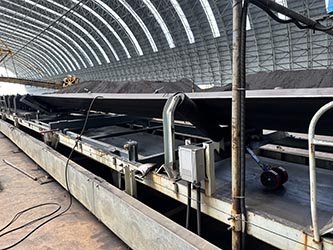
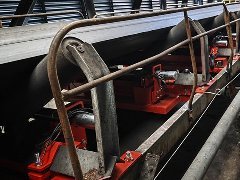
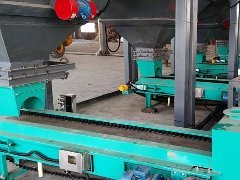
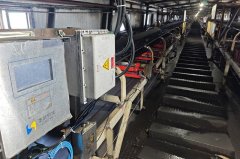
In industrial scenarios relying on continuous material conveying and metering such as cement plants, mines and power plants, electronic belt scales act as gatekeepers of the production process. However, many users are troubled by the gradual decline in weighing accuracy after long-term use. New belt scales deliver precise and reliable data, yet they frequently go out of calibration after several years of operation. This phenomenon mainly stems from mechanical wear, environmental corrosion and inadequate daily management.
I. Root Causes of Declining Weighing Accuracy
1. Aging and Drift of Core Sensors
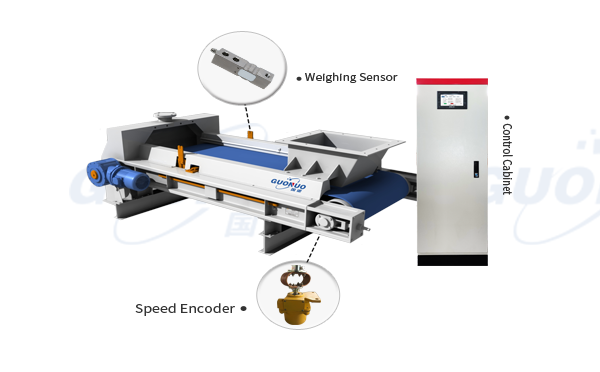
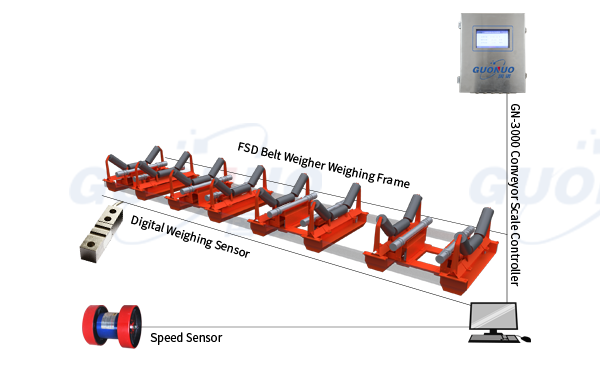
• Weighing Sensors (Compression/Tension Type): Under long-term material load, belt tension and vibration impact, internal strain gauges and sensitive components gradually degrade, resulting in zero drift (non-zero output under no-load condition) and sensitivity deviation (output signal no longer proportional to actual weight).
• Speed Sensors (Encoder/Proximity Switch): Stable speed detection is essential for instantaneous flow calculation. Roller slippage, bearing wear, dust accumulation on sensor probes and weakened magnetic effect will distort speed signals and directly cause flow calculation errors.
2. Deformation, Wear and Maladjustment of Mechanical Structures
• Changed Belt Tension: Prolonged operation leads to belt slack and elongation, altering effective tension within the scale frame and affecting force transmission and sensor stress conditions.
• Deteriorated Idlers: Seized bearings, abrasion, eccentricity and material adhesion on load-bearing idlers cause inflexible rotation, uneven operation resistance and belt jitter, bringing massive weighing errors.
• Scale Frame Deformation and Displacement: Foundation settlement, material impact and accumulated mechanical stress trigger slight deformation, displacement and loss of levelness/straightness of the scale frame, disturbing internal stress distribution.
• Belt Wear, Deviation and Joint Influence: Worn and aged belts or severe belt deviation lead to uneven material distribution. Uneven belt joints cause instant impact and signal fluctuation when passing through the weighing section.
3. Erosion and Interference from Environmental Factors
• Temperature Fluctuation: Affect thermal expansion and contraction of metal components and change component dimensions and tension distribution; electronic component parameters also drift with temperature changes.
• Dust and Humidity: Excessive dust invades the scale frame, idler bearings and sensor junction boxes, causing mechanical jamming, short circuits and poor contact. Humidity accelerates equipment corrosion and weakens insulation performance and signal transmission.
• Vibration and Impact: Continuous vibration from surrounding heavy-duty equipment and heavy material impact disrupt sensor signal stability and loosen structural parts over time.
• Electromagnetic Interference: Electromagnetic signals generated by frequency converters and high-power motors interfere with weak weighing signal transmission via power lines and signal cables.
4. Insufficient Maintenance and Improper Operation
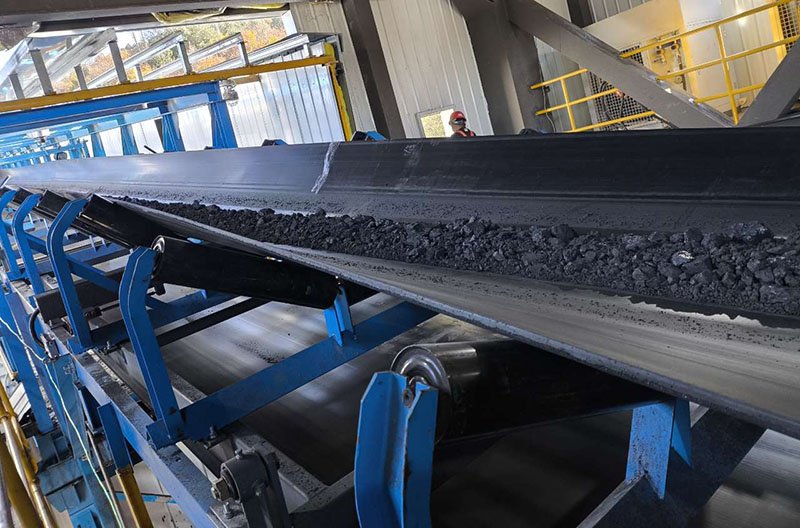
• Untimely Cleaning: Dust and material accumulation on scale frames and idlers are the most common artificial error sources.
• Missing or Non-standard Calibration: Failure to conduct regular physical calibration, chain code calibration or weight hanger calibration cannot eliminate systematic errors in a timely manner.
• Lack of Lubrication: Insufficient lubrication on rotating parts accelerates wear and increases operational resistance.
• Over-limit Operation: Long-term over-flow operation, frequent overload startup and unadjusted severe belt deviation speed up equipment aging.
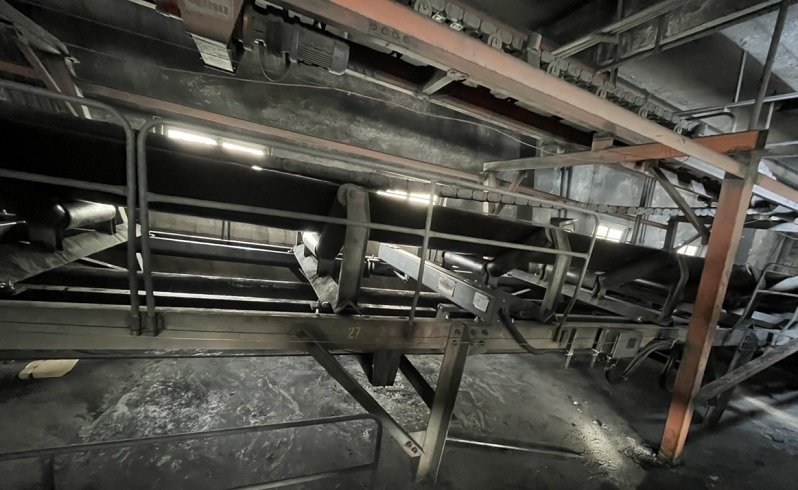
II. Solutions to Improve Long-Term Stability of Electronic Belt Scales
1. Establish Standard Preventive Maintenance Rules
• Conduct daily shift-based thorough cleaning to remove accumulated materials and dust on scale frames and weighing idlers.
• Implement regular weekly inspections on belt deviation, tension devices, idler operation flexibility and overall structural stability.
• Perform periodic bearing lubrication in accordance with official operation manuals.
• Regularly inspect and replace worn and inflexible key idlers, and complete replacement records.
2. Strict Regular Calibration (Core of Accuracy Guarantee)
• Formulate fixed calibration cycles: weekly zero calibration, monthly chain code/weight hanger calibration, quarterly/semi-annual physical calibration; mandatory calibration after installation, overhaul and working condition changes.
• Standardize calibration procedures: complete zero calibration under stable no-load belt operation; place chain codes in the center of the full weighing width; adopt third-party verified standard materials for physical calibration and record all data completely.
3. Environmental Adaptation Upgrade and Protection
• Install high-grade dustproof, waterproof and shockproof protective covers for core sensors, and select sensors with high IP protection level.
• Equip flexible wear-resistant sealing plates and brushes on both sides of scale frames to block dust and material overflow.
• Install shock absorption pads and reinforce foundations in severely vibrating working areas.
• Adopt shielded twisted-pair cables, separate signal wiring from power lines, and install filters and isolators to eliminate electromagnetic interference, ensuring reliable instrument grounding.
4. Optimize Belt Operating Status
• Regularly adjust belt tension to the designed standard and install online tension monitoring devices if necessary.
• Ensure automatic belt deviation correctors work efficiently to avoid accuracy loss caused by belt deviation.
• Maintain smooth and firm belt joints to reduce operation impact.
5. Technical Upgrade and Optimized Model Selection
• Select high-quality and stable core sensors and speed detectors during replacement.
• Upgrade to advanced scale frames such as suspended type and matrix type for high-precision and harsh working conditions, which feature strong anti-unbalanced load and anti-interference performance.
• Adopt weighing instruments equipped with self-diagnosis and trend analysis functions for early fault prediction.
6. Strengthen Staff Training and On-site Management
• Provide systematic training for operators and maintenance personnel on working principles, daily inspection points, calibration standards and safety operation specifications.
• Establish complete ledgers for maintenance, calibration and equipment repair, clarify personal responsibilities, and incorporate belt scale accuracy into post assessment indicators.
The accuracy decline of electronic belt scales is reversible. It is jointly caused by mechanical abrasion, harsh environment and insufficient maintenance. The effective solution is to integrate scientific preventive maintenance, periodic standardized calibration, targeted environmental protection and standardized personnel management, so as to build a closed-loop lean operation and maintenance system and maintain long-term stable and accurate metering performance of electronic belt scales.