With the rapid development of industrial production and the continuous pursuit of automation and intelligence, there are also significant changes in the requirements for production management measurement tools.
Electronic belt scale is an automated measuring equipment for dynamic and efficient measurement of industrial bulk materials, which is constantly developing with the changing requirements of production control.
At present, electronic belt scales have broken through traditional structural concepts and continuously enriched their functions, with more intelligent features. They can not only provide efficient measurement services for industrial enterprises, but also provide more production monitoring and management methods for enterprises.
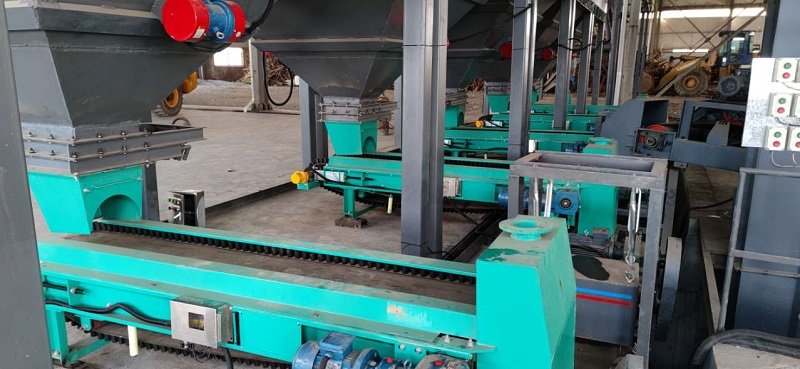
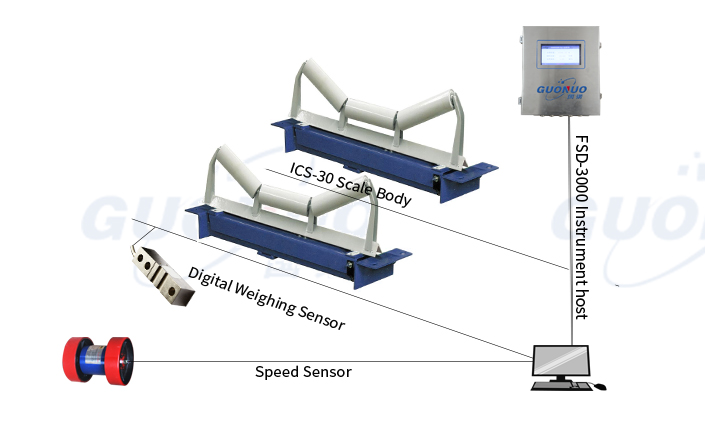
The matrix electronic belt scale is a new type of belt scale that is currently at the forefront of development. It has rich intelligent functions, a simple structural form, and is equipped with intelligent instruments and digital sensors, making the measurement accuracy and stability incomparable to traditional belt scales.
In terms of maintenance and calibration, the matrix electronic belt scale also achieves self calibration and maintenance free. It can even be said that to some extent, matrix electronic belt scales are the current development direction of electronic belt scales.
(1) Digital sensors
The original weighing sensor was an analog signal, which was not conducive to long-distance transmission and was easily affected by environmental interference such as surrounding electromagnetic waves. By using a digital converter, analog signals can be converted into digital signals, enhancing the anti-interference ability of weighing signals and meeting the requirements of long-distance transmission, effectively ensuring the accuracy of weighing.
(2) Redundant sensor design
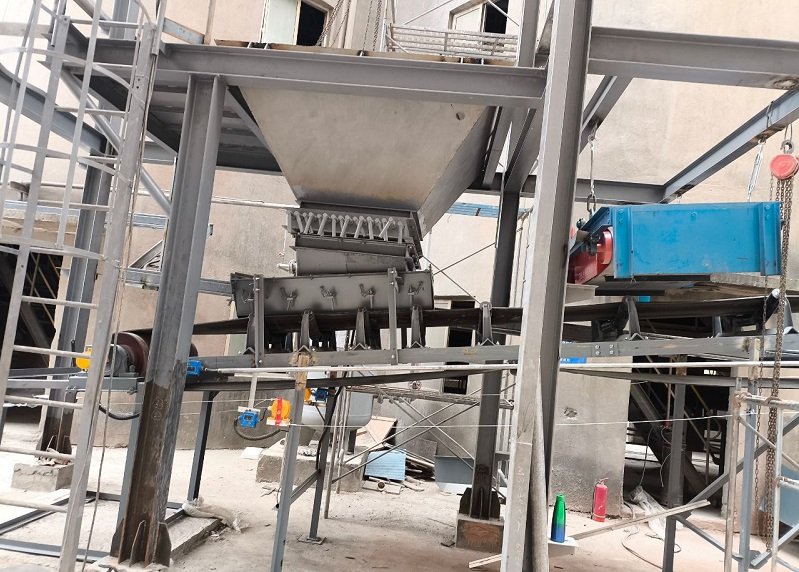
At present, belt scales used for continuous weighing of materials on belt conveyors often use one weighing sensor as the measuring element on the carrier frame, and consist of one or more sets of measuring elements, a speed sensor, and an accumulator to form a belt scale weighing system. This type of belt scale has only one weighing signal output from the weighing sensor. When one of the weighing sensors fails, the entire belt scale will be inaccurate and difficult to detect during operation, which affects the accuracy and stability of the measurement.
The new matrix electronic belt scale adopts a mode of combining multiple weighing units, with independent sensors and load-bearing devices for each weighing unit, working independently. When one weighing unit fails abnormally, it does not affect the operation of other weighing units, and the system can still work normally, improving the overall stability of the belt scale operation.
(3) Intelligent instrument
Intelligent instruments have real-time online monitoring capabilities, and the system monitors the actual operation of the belt scale in real time. Once an abnormality occurs, it will sound an alarm in the form of sound and light.
The instrument records the time and analysis of the abnormality, assists maintenance personnel in timely, fast, and accurate judgment of the cause of the abnormality and troubleshooting, and helps improve the stability and durability of the belt scale. The matrix electronic belt scale intelligent instrument also has functions such as self calibration and automatic online zero calibration.
(4) Simplify the structure
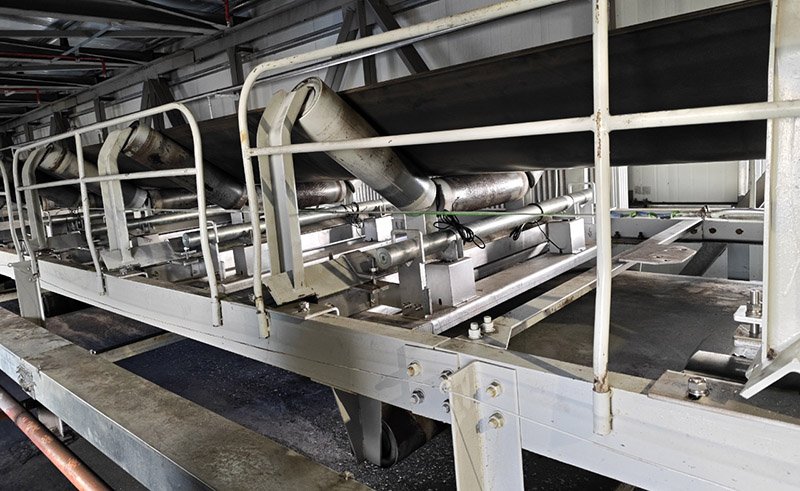
The most significant feature of the matrix electronic belt scale is that it abandons the traditional design structure and instead adopts a matrix arrangement of weighing units to form a measuring platform.
The weighing units are arranged and combined according to a mathematical calculation model, and the units are independent of each other. If one unit cannot work, it will not affect the normal operation of other units. The number of weighing units can be flexibly selected or expanded in the future based on conditions such as conveyor capacity, bandwidth, and tilt angle. The more streamlined structure combined with intelligent functions greatly reduces maintenance workload.