The electronic belt scale is installed on a belt conveyor and uses the instantaneous material weight signal and belt speed signal on a certain section of the belt to achieve automatic weighing and measurement of bulk materials. To successfully carry out this weighing process, the first step is to use a scale body or frame, also known as the "effective weighing section" or "weighing area".
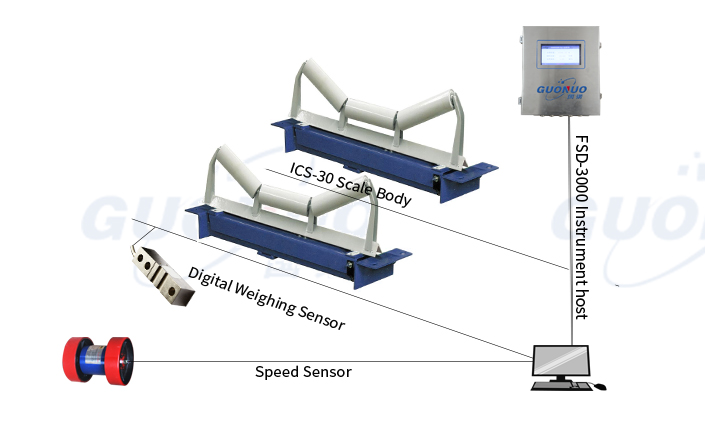
In this way, when the weighing device picks up and receives the instantaneous weight of the material passing through the "effective weighing section" belt supported by the scale body, it is converted into an electrical signal to obtain the weight signal of the material. After receiving the signal, the instrument will process and calculate it with the speed signal obtained by the speed sensor to obtain the instantaneous flow rate value conveyed by the belt conveyor. Further accumulated, it will obtain the total conveying volume or cumulative value of the belt conveyor during a certain period of time.
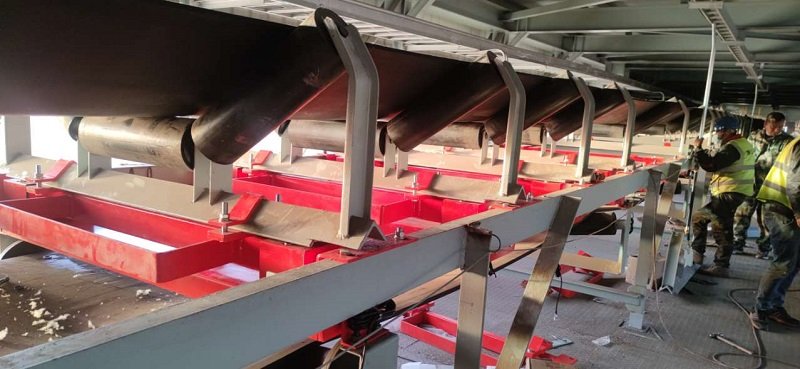
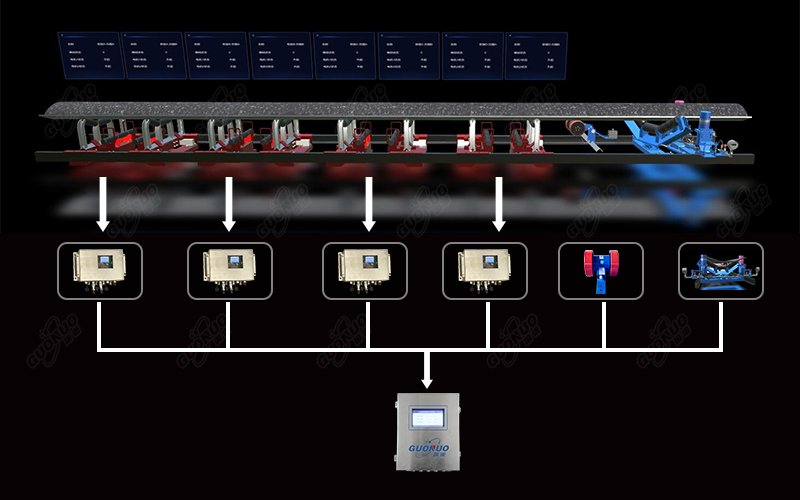
From the working process of the electronic belt scale mentioned above, it can be seen that its working results come from the scale frame, weighing sensor, speed sensor, and instrument, which are inseparable components. Therefore, the accuracy and stability that electronic belt scales can achieve depend on the performance of these components.
With the development of weighing sensors, speed sensors, and instrument technology, the importance of the scale body has become more apparent, which is an important and direct reason for electronic belt scales to achieve high accuracy and stability.
In the initial stage of electronic belt scales, the scale body often used a "cross" shaped spring or "X" shaped spring as the fulcrum, with structures such as ear axis and knife edge support fulcrum. The instantaneous load was transmitted through force transmission mechanisms such as fulcrum/lever. However, the drawbacks of this structure become increasingly apparent with application.
Firstly, there are multiple stages of force transmission, resulting in significant force loss during the weighing process;
Again, mechanical structures such as ear shafts and pivot points may experience friction, which can affect weighing;
In addition, while the instantaneous load is amplified or reduced by the lever, external interference, especially the impact and vibration from the weighing roller, will also be amplified or reduced, increasing the difficulty of data processing.
In short, this type of electronic belt scale body is prone to unstable and unreliable operation, and it is difficult to maintain a certain level of accuracy.
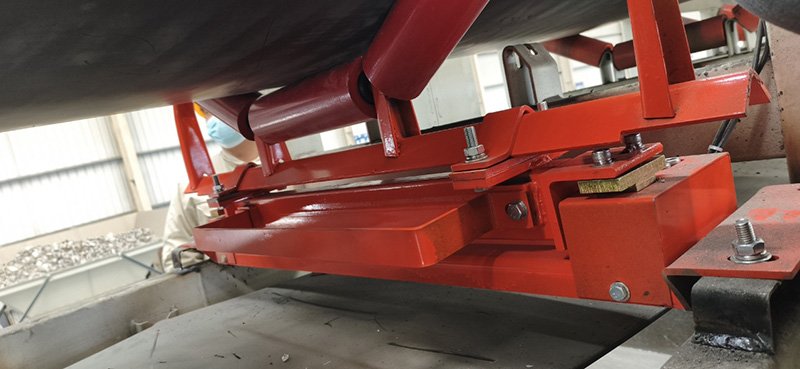
With the development of electronic belt scale technology, the structure of the scale body is gradually improving and innovating, and the electronic belt scale body has entered a new stage of development. Belt scale manufacturers have started to reduce or even adopt new types of unsupported scales, using instant load capacity that neither amplifies nor shrinks, directly acting on the weighing sensor, without force transmission or loss, and without component friction, thus designing and manufacturing high-precision electronic belt scales.
For example, the FSD high-precision electronic belt scale designed and manufactured by Guonuo Technology adopts a supporting, fully suspended combined scale frame structure. This type of scale frame structure does not necessarily use high-precision digital weighing sensors, but can combine weighing modules according to the conveyor situation to extend the effective weighing section.
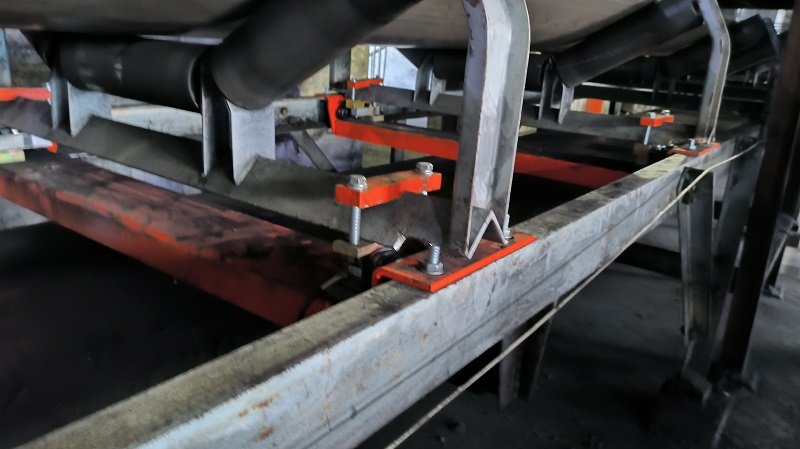
Four digital cantilever beam type weighing sensors support two sets of weighing rollers as a unit module, combined to form a multi roller scale frame, which can achieve higher measurement accuracy. In addition, the horizontal surface of this scale frame structure is much smaller than that of the lever structure, avoiding the impact of dust accumulation and material jamming on measurement.
From this, it can be seen that the structure of electronic belt scales has been developing towards high precision, simple structure, flexibility, easy installation and maintenance. Guonuo Technology has always kept up with market and industry development, with a variety of electronic belt scales to meet various needs of users.