In the continuous transportation and measurement process of industrial bulk materials, the long-term measurement stability of electronic belt scales directly affects the production cost accounting, trade settlement fairness, and overall operational efficiency of enterprises. However, due to complex on-site conditions, belt scales often experience accuracy drift due to mechanical structural changes, environmental interference, and other factors.
To fundamentally solve this pain point, systematic optimization must be carried out from multiple technical dimensions such as hardware design, software algorithms, and intelligent calibration.
1、 Optimize mechanical structure and solidify stability foundation
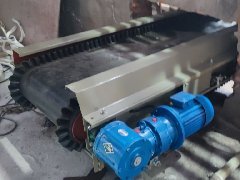
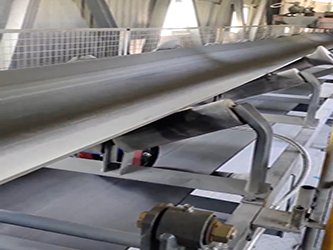
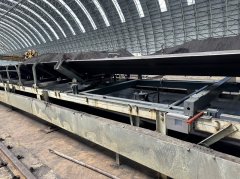
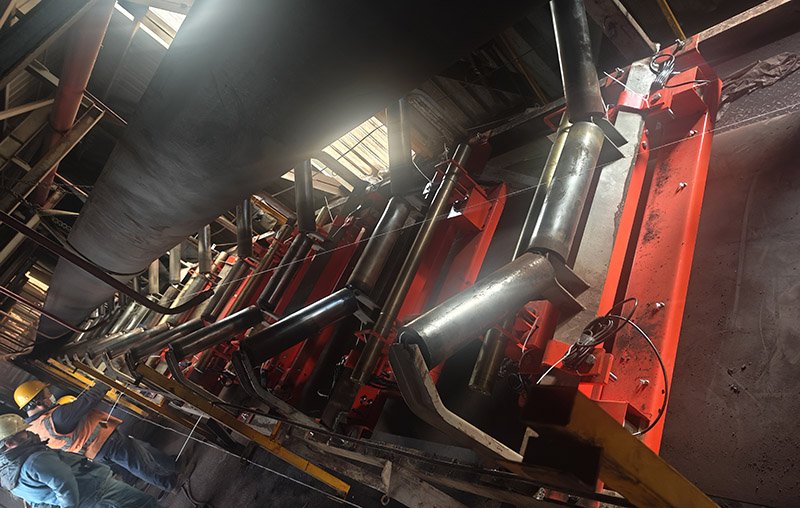
The mechanical structure is the fundamental guarantee for the long-term stable operation of electronic belt scales. Insufficient rigidity of the scale frame, excessive radial runout of the rollers, and coaxiality deviation can lead to vibration and uneven force distribution when materials pass through the scale frame, exacerbating fluctuations in measurement data.
The scale frame of traditional belt scales often adopts a simple single lever structure, which is prone to deformation under the long-term effects of material impact and heavy load wear, directly damaging the vertical transmission path of the weighing force.
The key to improving the stability of mechanical structures lies in:
firstly, adopting a high rigidity scale frame design, such as a fully suspended rectangular steel tube main beam structure, which can increase the overall rigidity by more than 40% and eliminate the risk of structural deformation under long-term heavy loads;
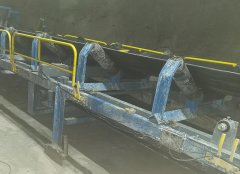
The second is to ensure the precise alignment of the rollers in the weighing area, with a height difference controlled within 0.2mm;
The third is to increase the number of weighing roller groups, improve the rigidity of the weighing platform, reduce the sinking of the weighing platform caused by roller bending, and increase the length of the effective measuring section to reduce the impact of tare weight changes on the entire weighing process.
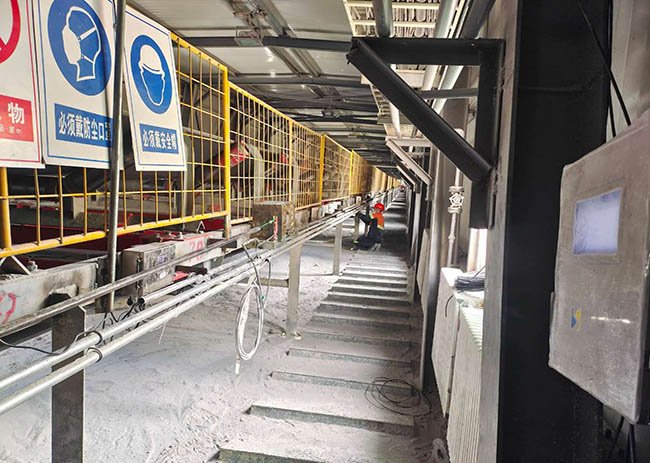
In addition, the selection of installation location is also crucial - the belt scale should be installed as much as possible in the place where the tension change of the conveyor is minimal, away from the head, tail, and guide chute, to avoid the impact load of material falling.
2、 Upgrade the sensing and signal transmission system to improve the quality of data acquisition
Sensors are the "sensory organs" of electronic belt scales, and their performance directly determines the measurement accuracy. Adopting high-precision and high stability weighing sensors, optimizing sensor layout, and reducing the impact of belt tension changes are the fundamental means to improve accuracy.
Practice has shown that by using high-precision weighing sensors combined with improved digital filtering algorithms and adaptive temperature compensation technology, the relative error can be stably controlled within ± 0.5%, and the zero drift amplitude can be reduced to within ± 0.03%.
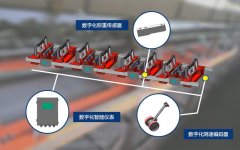
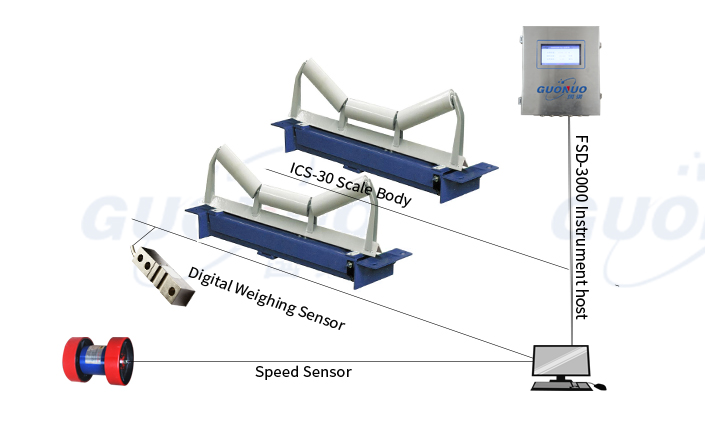
In terms of sensing architecture, the traditional single point sensing mode should be abandoned and a matrix based multi-sensor redundant configuration should be adopted. Multiple weighing units are mutually verified.
When a sensor experiences an abnormality, the system can automatically identify and switch to a normal unit to complete the measurement without any data interruption. At the same time, digital signal direct transmission technology is used to replace traditional analog signal long-distance transmission, and analog-to-digital conversion is directly completed from the sensor end, completely avoiding signal distortion caused by strong electromagnetic interference in industrial sites.
Non contact photoelectric pulse sensors should be used in the speed measurement process to completely avoid the slip and wear faults of traditional contact speed measurement wheels, and to improve the long-term stability of the speed signal by an order of magnitude.
3、 Strengthen signal processing and intelligent compensation to achieve dynamic and accurate measurement
Even if the mechanical structure and sensors are optimized, environmental factors such as temperature changes, belt creep, and roller wear are still difficult to completely avoid. Temperature changes can cause zero drift and changes in elastic modulus of sensors, resulting in measurement deviations. Therefore, effective compensation must be achieved through advanced signal processing techniques.
Specific measures include: adopting digital filtering, temperature drift compensation, nonlinear correction and other technologies, and the system error can be as low as 0.03% after digital signal processing; Introducing modern signal processing methods such as Kalman filtering to denoise and filter symmetric signals, effectively suppressing the interference of environmental noise on measurement results. In addition, the system also needs to monitor and analyze the operating conditions of the belt scale in real time, and dynamically perform optimization operations such as zero calibration.
4、 Introducing AI algorithms and self-learning capabilities to achieve intelligent operation and maintenance
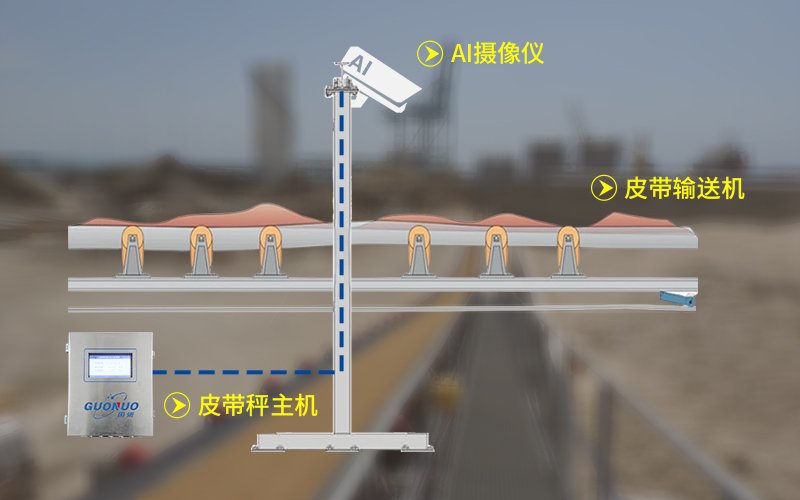
In recent years, the introduction of artificial intelligence technology has opened up a new path for the long-term stability improvement of electronic belt scales. A multimodal signal self-learning intelligent algorithm based on wavelet transform and neural network technology can achieve precise fusion and deep state perception of various sensor data such as tension, displacement, temperature, etc., greatly improving the system's adaptability and intelligence level. By deeply integrating AI deep learning algorithms with digital metrology technology, with "dynamic self-learning multimodal perception intelligent compensation" as the core mechanism, continuous optimization and stable improvement of device accuracy can be achieved.
More importantly, the online self-learning ability - during the continuous operation of the device, the system utilizes the constantly influx of new data streams to fine tune and adaptively optimize the model, identify the current operating characteristics in real time, and dynamically compensate the core measurement signal at the millisecond level. When detecting belt deviation, vibration, or load changes, the AI model will automatically adjust the measurement parameters and dynamically compensate for errors, ensuring that the measurement accuracy remains stable at a high level.
From increasing the stiffness of mechanical structures to precise perception through multi-sensor information fusion; From precise filtering of data processing technologies such as temperature compensation to AI algorithm driven adaptive evolution - systematically improving the long-term measurement stability of electronic belt scales, it is not a single technological breakthrough, but a complete technical link from hardware foundation to intelligent upper layer. Only by organically combining mechanical optimization, sensor upgrading, signal processing, and intelligent algorithms can we truly solve the stubborn problem of "increasingly inaccurate" belt scales and provide reliable and accurate measurement guarantees for industrial production.