In modern industrial production, especially in the continuous weighing of bulk materials such as coal, ore, grain, cement and building materials, belt weighing devices play an indispensable role.
They can not only realize fast and accurate material weighing, but also provide production data for enterprise management, thereby effectively boosting production efficiency, cutting costs and upgrading management standards.
Although multiple types of belt weighing devices are available on the market, including nuclear belt scales and laser belt scales, electronic belt scales have gained extensive application thanks to their comprehensive advantages.
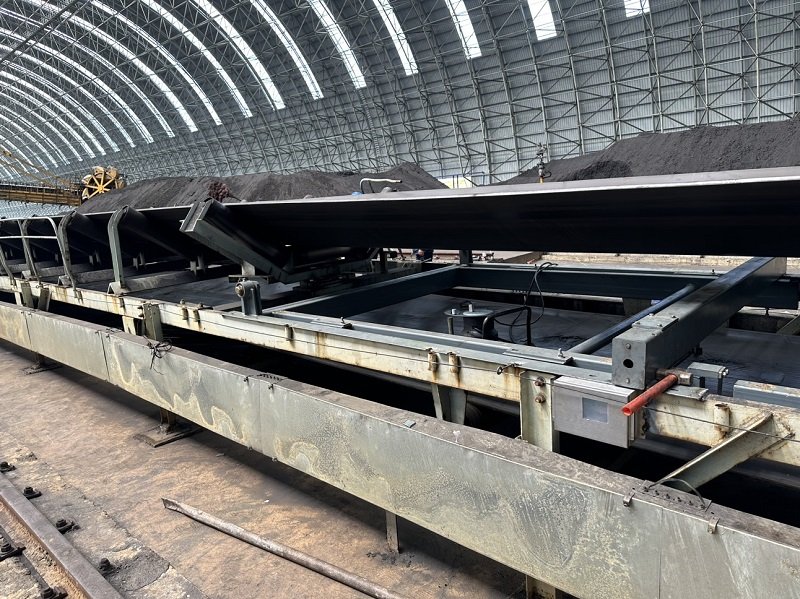
Belt weighing devices can be classified into several categories based on their working principles and technical characteristics, with the most representative types being electronic belt scales, nuclear belt scales and laser belt scales.
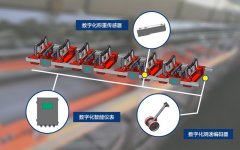
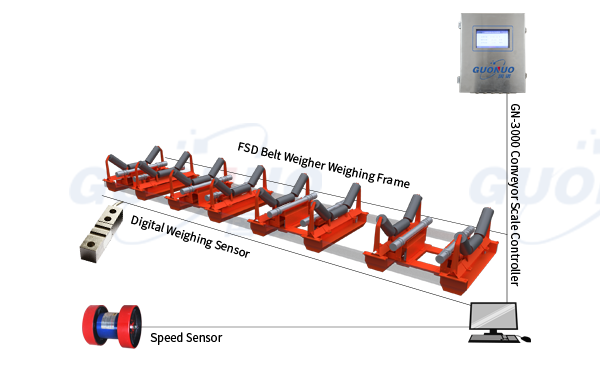
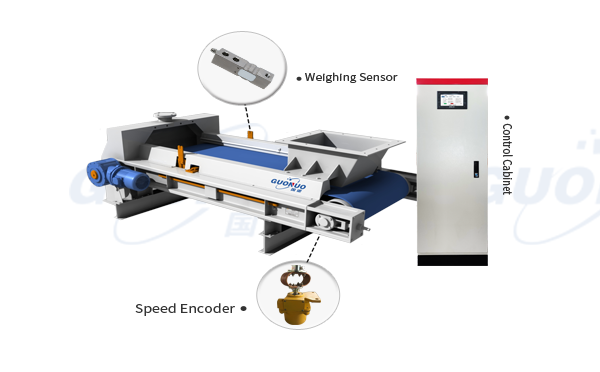
● Electronic Belt Scale: It adopts electronic sensors to dynamically detect and weigh materials passing on the conveyor belt. A computing unit calculates the material weight per unit time to achieve continuous metering.
● Nuclear Belt Scale: It performs non-contact weighing by letting rays emitted from radioactive isotopes penetrate materials, suitable for weighing special materials. However, its application is subject to certain restrictions due to the involvement of radioactive substances.
● Laser Belt Scale: It applies laser technology to measure the height or volume of materials on the belt, and calculates the weight by combining belt speed and material density. This technology has unique strengths in certain specific scenarios yet shows limited applicability for materials with irregular volumes.
The main reasons for the widespread adoption of electronic belt scales are listed as follows:
1.Structural Design
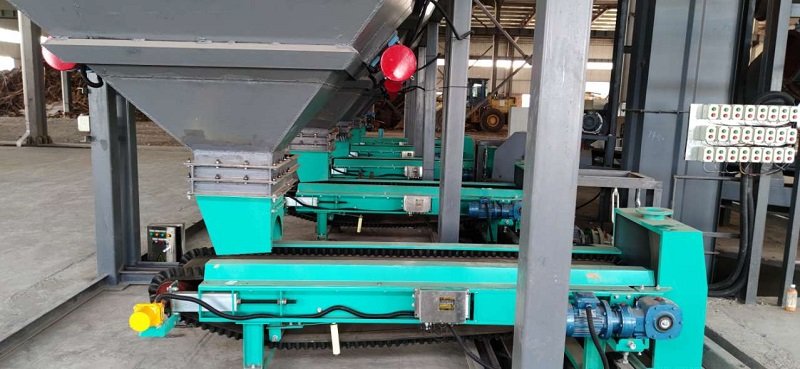
They feature a simple structure, and customized weighing frames can be designed according to working conditions and conveyor parameters. In particular, the modular combined weighing frame consists of fewer components, facilitating easy installation, maintenance and repair.
2.Weighing Accuracy
Compared with other types of belt scales, electronic belt scales deliver high and stable weighing accuracy, with multiple accuracy grades to satisfy diverse application requirements. In particular, matrix high-precision belt scales can effectively counteract interferences such as belt tension. Equipped with high-precision sensors, intelligent instruments and digital processing technology, they meet strict high-precision demands for trade settlement and production control.
3.Strong Adaptability
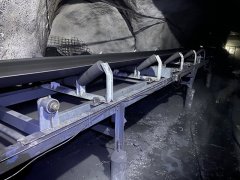
Electronic belt scales can adapt to a wide range of complex working environments and material properties, with few restrictions on bulk materials. Standard-compliant electronic belt scale products are available for harsh environments including chemical plants and coal mines.
4.Easy Installation and Commissioning
The simple structure streamlines installation and commissioning procedures. Intelligent instruments integrate one-click calibration, zero-setting and other functions to further simplify the debugging process.
5.User-friendly Operation
Electronic belt scales are equipped with intuitive and fully functional human-machine interfaces. Operators can view real-time weighing data, adjust parameters and troubleshoot faults via the display screen. The integration of automation, intelligent and digital technologies endows electronic belt scales with advanced intelligent and automatic functions, such as intelligent monitoring, performance evaluation, fault diagnosis and automatic calibration, greatly simplifying maintenance and regular calibration. Additionally, they support remote monitoring and data transmission to facilitate production management.
6.Eco-friendly Performance
The operation of electronic belt scales raises no environmental concerns and generates no hazardous substances.
7.High Cost Performance
Though some high-precision electronic belt scales come with a slightly higher upfront price, they offer superior overall cost performance when considering weighing precision, long-term operating costs and maintenance expenses.
In conclusion, with outstanding structural design, reliable high weighing accuracy, strong environmental adaptability, simplified installation and commissioning, intuitive operation, eco-friendly attributes and excellent cost performance, electronic belt scales stand out among all belt weighing equipment and are widely deployed for automatic bulk material weighing across various industries.