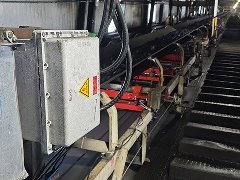
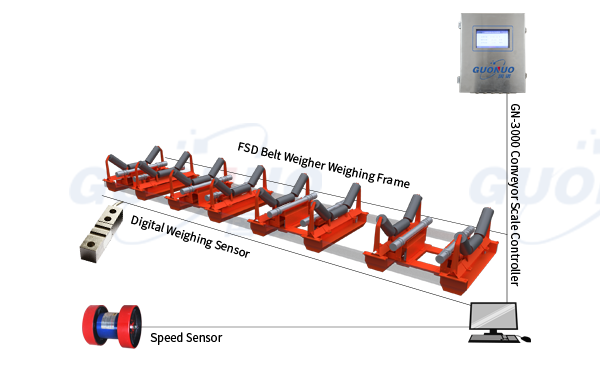
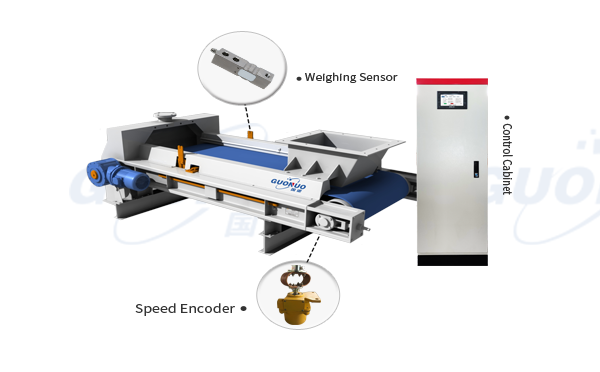
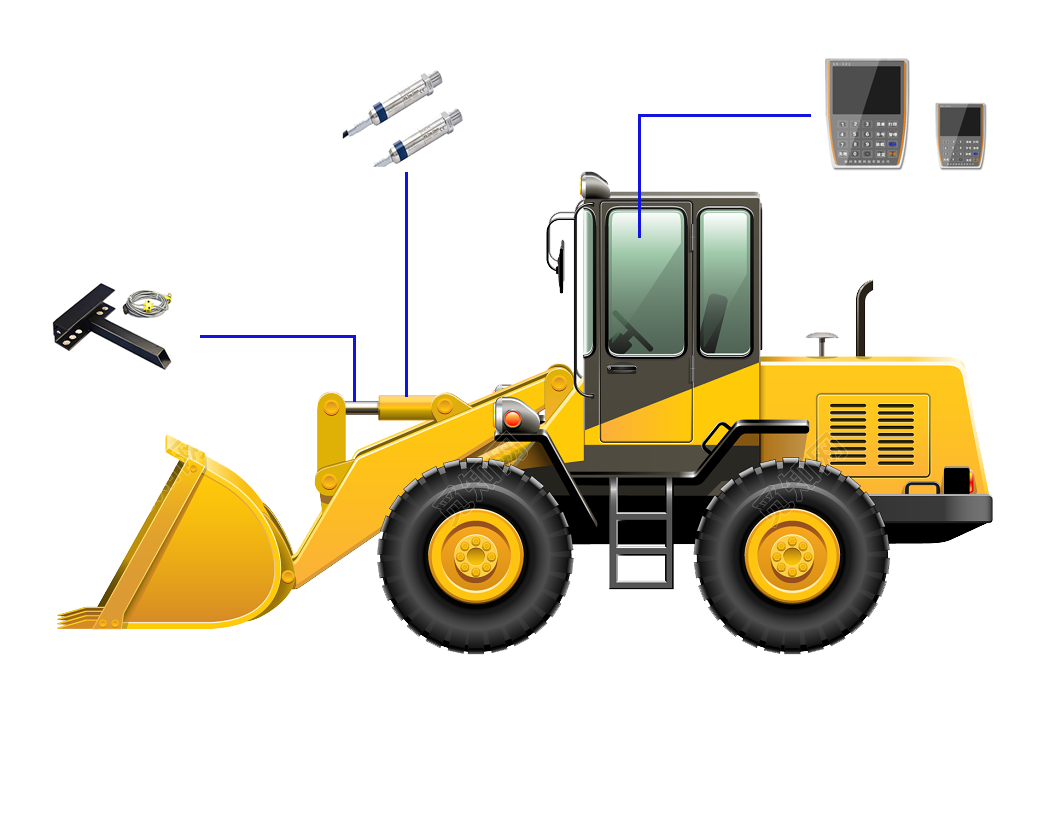
In modern industrial production and management, accurate material weighing and management are crucial for improving production efficiency, controlling costs, tracking raw material consumption, and tallying output. With the development and widespread application of artificial intelligence (AI) technology, electronic belt scales have also seen intelligent advancements. The deep integration of AI has not only significantly improved the measurement accuracy of belt scales but also driven progress toward more efficient and refined management.
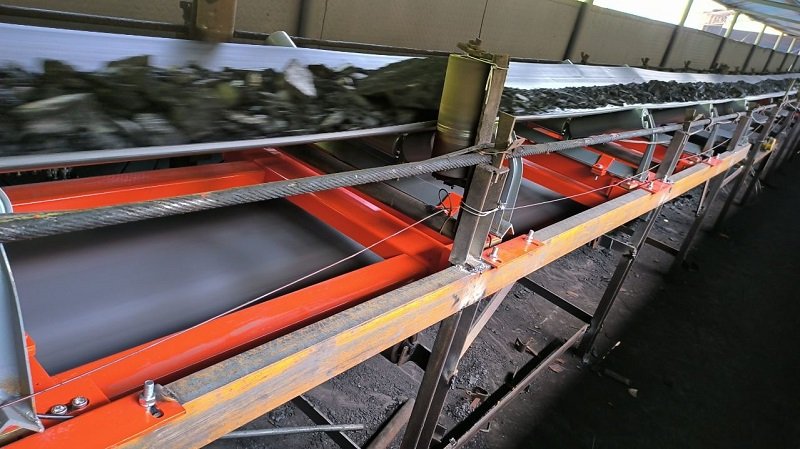
AI Improves Weighing Accuracy
Traditional electronic belt scales rely mainly on sensors, signal processing, and dynamic weighing algorithms to measure material flow. However, in complex and variable industrial environments, various disturbances often lead to measurement errors.
AI technology addresses this by using deep learning algorithms to train and analyze large amounts of historical data, intelligently identifying and compensating for interference factors such as belt tension changes and material buildup, thereby significantly enhancing measurement precision and reliability.
Additionally, AI algorithms can automatically adjust parameters based on the physical characteristics of the material, enabling dynamic calibration to ensure stable and reliable measurement results.
Efficient and Automated Management
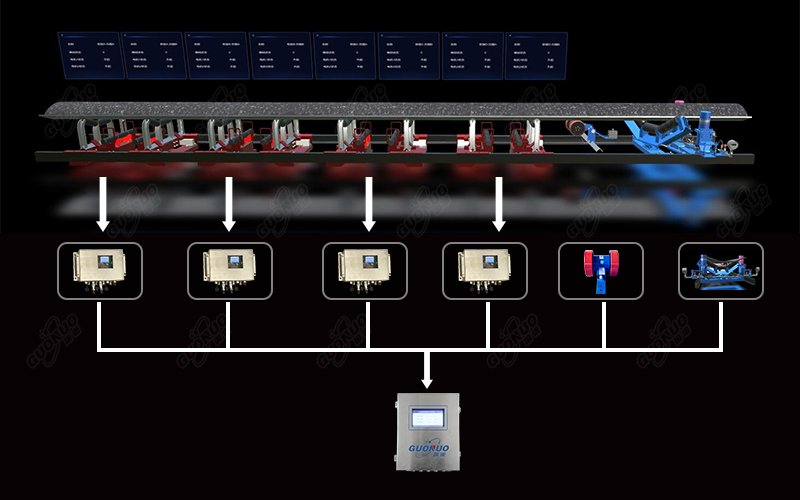
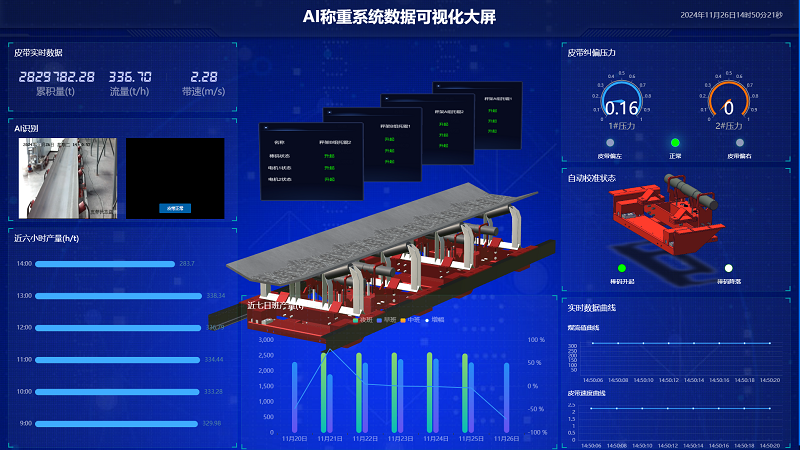
AI not only improves weighing accuracy but also greatly promotes efficient and automated management of electronic belt scales. By integrating advanced AI algorithms, belt scales can monitor key parameters in real time—such as material flow, belt speed, weighing results, and sensor status—and provide diagnostic analysis and corresponding actions.
For example, when belt load is uneven, the system automatically corrects misalignment; two groups of weighing units can cross-verify each other and perform automatic calibration without stopping production or requiring manual intervention. This intelligent measurement and management reduces manual involvement, increases production efficiency, and lowers energy consumption and operating costs.
Moreover, AI can predict equipment failures and issue early warnings, supporting preventive maintenance and further ensuring production continuity and stability.
Upgraded Refined Management
Empowered by AI, electronic belt scales are gradually moving toward refined management. By collecting and analyzing large volumes of production data, AI algorithms can uncover hidden patterns and trends, providing a basis for more scientific decision-making.
For instance, real-time monitoring and analysis of material flow allow companies to more accurately track production progress and material consumption, thereby optimizing production plans and inventory strategies, and achieving more rational resource allocation and efficient utilization.
AI technology empowers electronic belt scales, raising the precision, efficiency, and refinement of industrial weighing and management. By improving weighing accuracy, enabling predictive maintenance, optimizing production scheduling, and providing data-driven decision support, AI drives intelligent progress in industrial production.