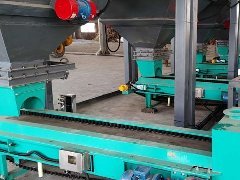
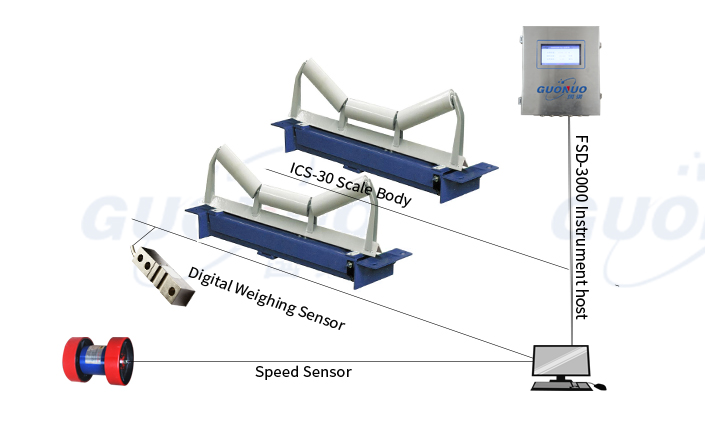
In many industrial scenarios involving continuous measurement of powder or small particle materials such as cement, chemical, metallurgical, and environmental protection, the spiral weighing feeder has become an indispensable key equipment due to its compact structure, good sealing, and strong adaptability.
However, the seemingly simple selection of spiral feeders actually hides hidden mysteries. Improper selection can lead to inadequate measurement accuracy and production fluctuations, and in severe cases, frequent material blockages, equipment damage, and skyrocketing maintenance costs, seriously affecting production efficiency and economic benefits.
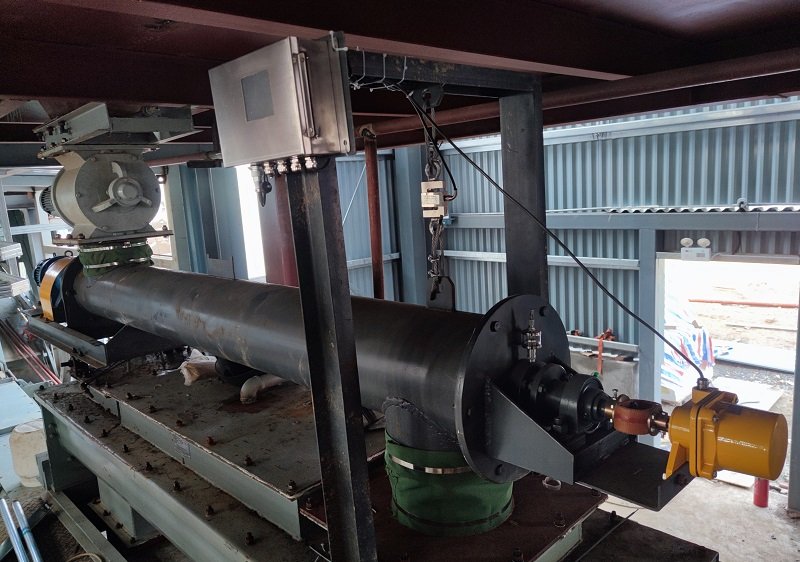
This article aims to outline the key parameters and configuration points that must be deeply understood in the selection process of spiral weighing feeders, to help you accurately avoid pitfalls and choose the right equipment!
1、 Core pain point: The cost of improper selection
● Inaccurate accuracy: large flow fluctuations, imbalanced ingredient ratios, unstable product quality, and even scrap.
● Poor operation: Frequent blockage and spraying of materials have forced the production line to shut down, resulting in huge capacity losses.
● Short lifespan of equipment: components such as spiral blades, bearings, and seals wear out or are damaged too quickly, resulting in high maintenance costs.
● Control failure: Poor matching with the control system, slow response, and inability to achieve stable and accurate flow control.
● Investment waste: Equipment purchased for pulling small carts or small carts with redundant performance or insufficient capacity.
2、 Key parameters that must be considered for selection (the basis for accurately matching requirements)
1. Material characteristics (selection basis!)
● Material name/composition: Clarify the chemical properties of the material (corrosive, flammable and explosive).
● Bulk density: directly affects flow calculation and equipment specification selection (unit: kg/m ³ or t/m ³).
● Particle size distribution/maximum particle size: determines the structure (solid, strip, blade), pitch, shaft diameter, and pipe diameter of the helical blade to avoid material jamming or uneven filling.
● Liquidity: affects the efficiency of material propulsion within the spiral and the design of the silo (whether an auxiliary feeding device is needed).
● Moisture content/viscosity: High moisture or viscous materials are prone to sticking and arching, requiring special treatment (blade structure, surface treatment, cleaning device).
● Temperature: High temperature materials need to consider their heat resistance and thermal expansion compensation.
● Grinding properties: High grinding materials (such as mineral powder and quartz sand) require wear-resistant blades and lining materials.
2. Process requirements (performance objectives)
● Flow range: the most core parameter! Clearly define the minimum flow rate (Qmin) and maximum flow rate (Qmax). The rated capacity of the equipment must cover the actual demand range and leave a certain margin (usually 10-20%), but it should not be too large to cause a decrease in accuracy. The flow unit needs to be unified (kg/h, t/h, etc.).
● Measurement accuracy: Clearly define the expected dynamic cumulative accuracy of the system (such as ± 0.5%, ± 1%). This is the basis for selecting the level of weighing sensor, instrument performance, and overall structural rigidity. Pay attention to distinguishing between static accuracy (calibration weights) and dynamic accuracy (actual operation)!
● Control requirements: Is it a simple constant flow control or does it require participation in complex batching systems as a slave station? What are the requirements for control response speed and stability?
● Process location: Installed under the silo? As an intermediate transportation link? How is the environment (temperature, humidity, dust, vibration)?
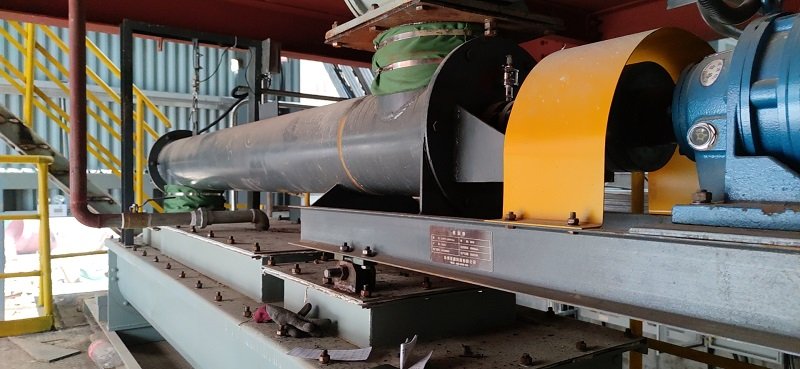
3. Key structural parameters of equipment (hardware guarantee for performance implementation)
(1) Diameter and length: The diameter of the pipe should meet the material's capacity to pass through at maximum flow rate, taking into account the particle size of the material. The length affects the length of the measuring section (affecting accuracy) and overall rigidity. The length of the measuring section is usually 4-6 times the diameter of the pipe, which is a common empirical value.
(2) Spiral type and pitch:
● Solid spiral: most suitable for dry and flowable powders and small particles.
● Belt shaped spiral: suitable for materials with slight viscosity or easy clumping, with a certain self-cleaning effect.
● Blade spiral: suitable for mixing, stirring, and conveying materials that are easily decomposed or require gentle handling.
● Pitch: Standard pitch (close to the pipe diameter) is the most common; Small pitch is used for difficult to advance materials or for larger filling rates; Large pitch is used for easily flowing materials or for fast conveying. Variable pitch design can improve inlet filling and outlet anti spray material.
(3) Speed range: directly related to flow rate. It is necessary to evaluate whether stable operation can still be achieved at the lowest speed at the minimum flow rate (to avoid "crawling" phenomenon). The maximum speed is limited by material scattering, wear, and vibration.
(4) Drive power: It needs to be calculated based on material characteristics, flow rate, pipe length, inclination angle, resistance, etc., to ensure that the motor has sufficient torque to start and run, and leave a margin. The frequency converter is standard.
(5) Weighing sensor:
● Type: Pull or press. Pressure type (cantilever beam type) is the most common, with a simple and reliable structure; Pull type is used in certain specific structures or when space is limited.
● Range and accuracy level: The range should cover the equipment from no-load to maximum load. The accuracy level (such as C3) directly affects the system accuracy.
● Quantity: Typically, dual or triple sensor structures ensure stable support and accurate force application.
(6) Measurement instrument: It needs to have high-precision A/D conversion, stable algorithm (filtering, anti vibration), PID control function, communication interface (analog, RS485, Ethernet, Profibus, etc.). Brand and reliability are crucial.
3、 Key configuration points (tools to improve performance and reliability)
1. Material selection (corrosion and wear resistance, guaranteed lifespan)
(1) Parts in contact with materials (spiral blades, pipe body, lining plate):
Carbon steel (surface treatment: galvanizing, spraying, painting) - universal and economical.
Stainless steel (304, 316L) - food, pharmaceutical, and general corrosive materials.
Wear resistant steel or overlay wear-resistant layer - high abrasion resistant material.
(2) Sealing: Shaft end sealing is crucial! Select packing seal, labyrinth seal, airtight seal (for ultrafine powder or harmful materials), and mechanical seal (with high requirements) according to the material.
2. Import and export design (smooth entry and exit, avoiding bottlenecks)
● Feed inlet: Good connection with the silo or front-end equipment. Materials with poor fluidity need to be equipped with activation devices (vibrators, fluidized bed mixers, stirrers, inclined cones, etc.) to break the arch and promote flow. The size needs to ensure uniform and stable feeding.
● Discharge port: The shape and size ensure smooth discharge of materials and avoid accumulation. Sometimes it is necessary to configure anti spray material design (such as variable pitch finishing, reverse blades, discharge gates).
3. Support and calibration (stable and accurate foundation)
● Weighing bridge structure: It must be very sturdy and highly rigid to reduce the impact of deformation on accuracy.
● Shock absorption measures: Install shock absorbers on the equipment body, use high-quality shock absorbers between the weighing sensor and the foundation to isolate external vibration interference.
● Zero point calibration and range calibration: The equipment must be convenient for high-precision static zero point calibration and physical (or chain code/hanging code) range calibration. Calibration weights or hanging points are standard equipment.
4. Auxiliary functions (configured as needed)
● Speed sensor: provides speed feedback for calculation control or speed compensation (dual closed-loop control improves accuracy), strongly recommended.
● Temperature sensor: monitors bearing temperature, high temperature alarm.
● Explosion proof design: It must comply with the corresponding explosion-proof level (Ex d, Ex e, etc.) in explosive environments.
● The brand and performance of the frequency converter directly affect the speed range, response speed, and smooth operation.
The selection of spiral weighing feeders is a systematic engineering based on a deep understanding of material characteristics, process requirements, and equipment performance. Accurately grasping the three cornerstones of flow rate, precision, and material characteristics, and carefully considering key structural and configuration points, is the key to avoiding pitfalls, ensuring long-term stable and reliable operation of equipment, and achieving precise measurement and control.