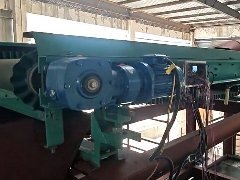
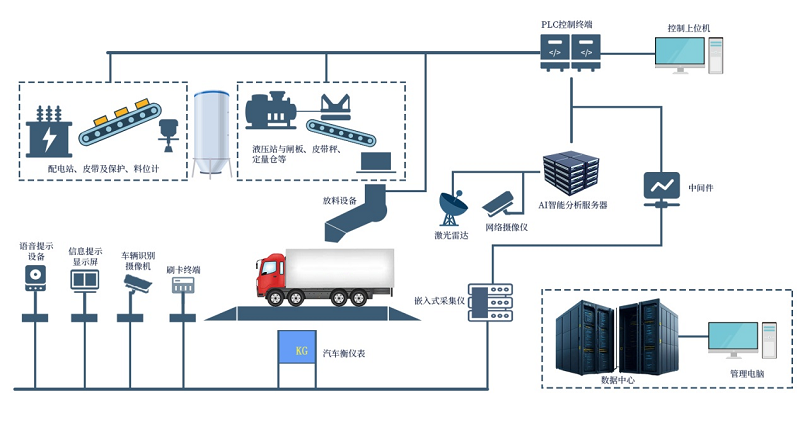
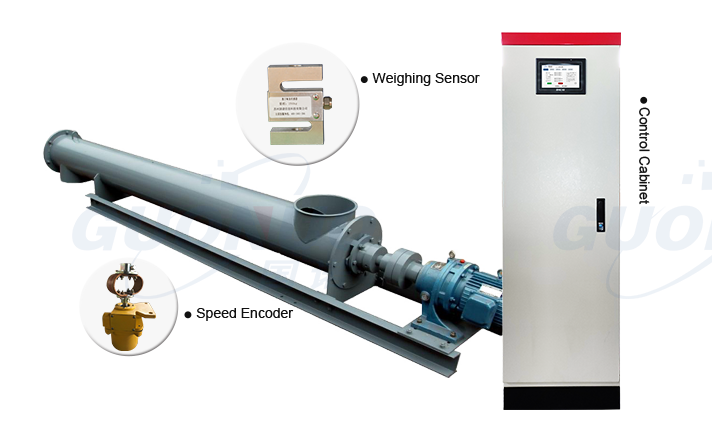
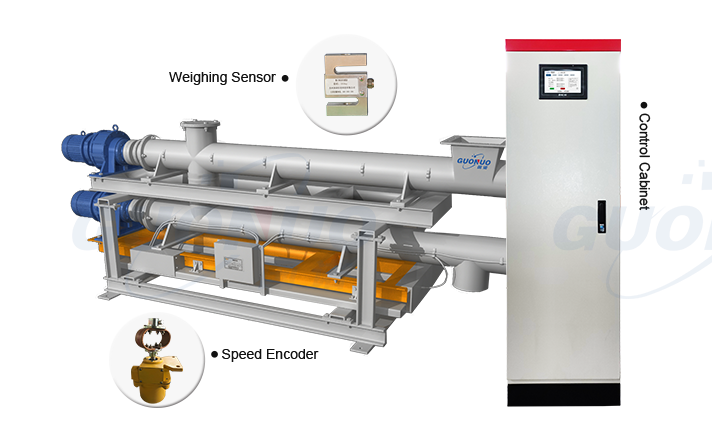
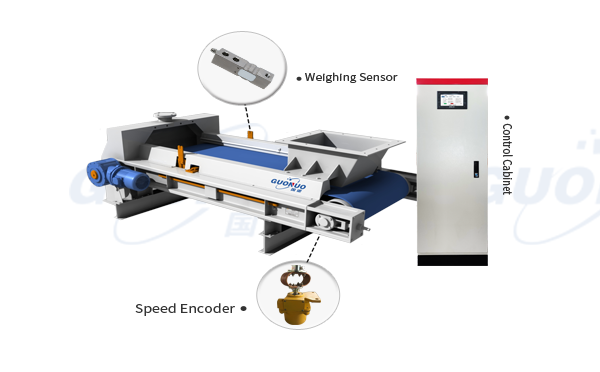
The matrix electronic belt scale enhances the precision of belt scales through innovative weighbridge structures, resolving issues such as unstable zero points. Its functions, including temperature compensation, online verification, real-time anomaly localization for troubleshooting, improve accuracy and stability. Remote monitoring and operation make the process simpler and more convenient. Matrix electronic belt scales offer numerous advantages and powerful functionalities, which Guonuo Technology briefly summarizes and analyzes below.

Easier Installation and Maintenance
The matrix electronic belt scale is composed of multiple fully suspended weighbridge arrays, with each serving as an independent weighing unit that can be combined based on actual site conditions. The suspended weighbridge design eliminates levers, making the equipment lighter and easier to transport and install, significantly reducing installation workload. The direct-bearing structure naturally minimizes moving parts, eliminating issues related to pivot point friction and damage, and reduces the unit area, thereby greatly decreasing maintenance requirements.
Higher Stability and Sensitivity
The sensors of matrix electronic belt scales are equipped with overload protection and other functions, ensuring stable signal transmission. The sealed structure prevents dust interference, enhancing anti-interference capabilities and resulting in higher stability and sensitivity.
Digital Converters Eliminate Measurement Errors
Matrix electronic belt scales employ on-site digital converters that instantly convert analog signals into digital signals at the point of weight data generation. This improves the precision of signal transmission and avoids measurement errors caused by signal distortion.
Real-Time Monitoring Enhances Measurement Accuracy and Stability
Matrix belt scales feature real-time monitoring and tracking capabilities, enabling remote surveillance of their operational status. This allows for the prompt identification and resolution of anomalies, enhancing operational reliability. The integrated temperature sensor in the instrument continuously monitors the on-site environment and incorporates this data into calculations, effectively mitigating the impact of temperature variations on measurements.