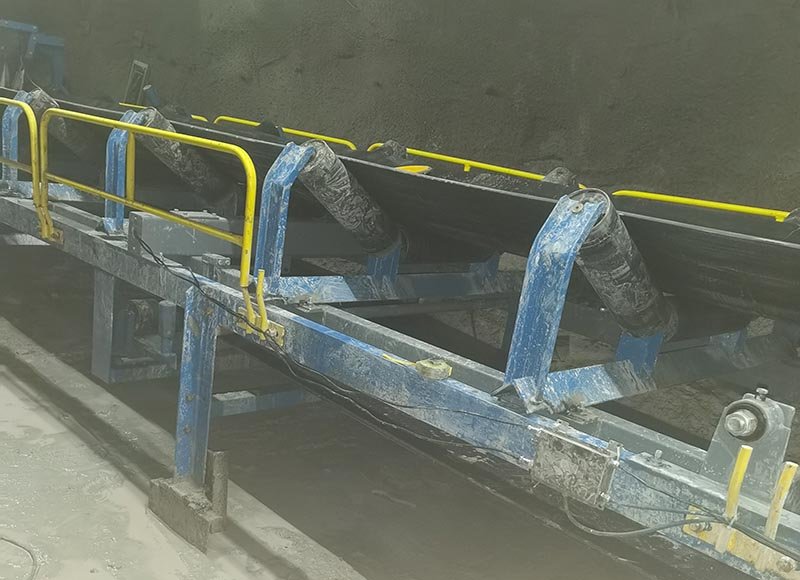
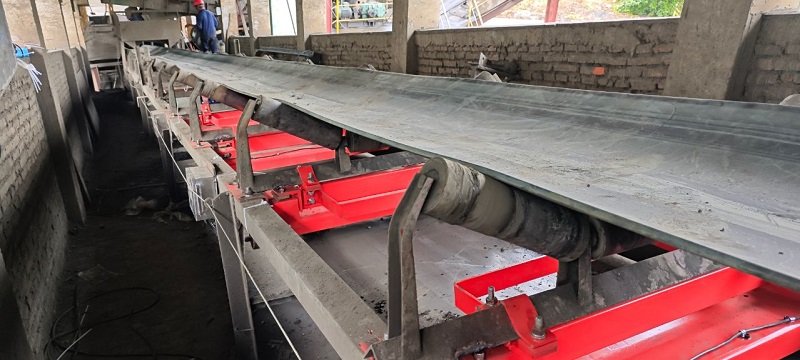
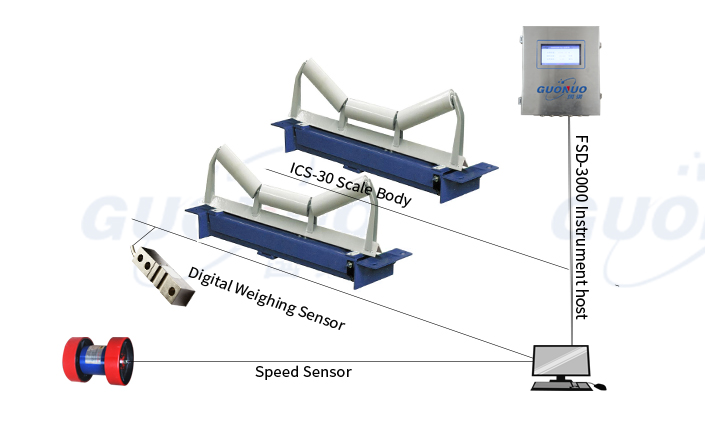
Belt type weighing feeder is a commonly used automated batching device in the industrial production field. It has the functions of continuous conveying of bulk materials, dynamic weighing, and automatic control, which is of great significance for improving the efficiency of bulk material batching operations and reducing batching errors. Of course, the belt type weighing feeder plays its role and value by continuously maintaining stable and reliable working performance. This is not only related to its own quality and performance, but also closely related to its daily maintenance, repair, and other work.
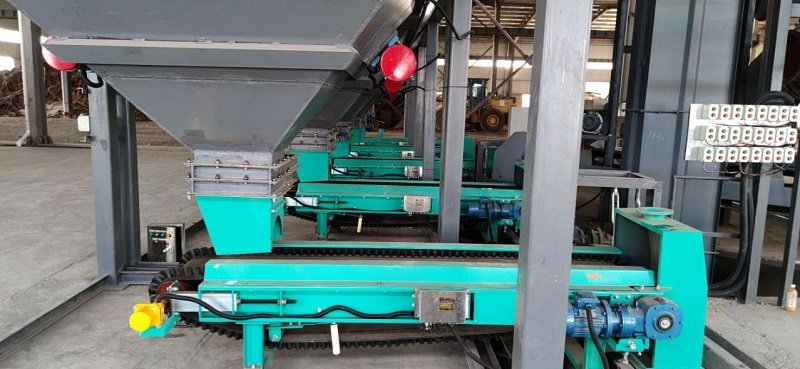
1. Daily maintenance work of the mechanical part of the belt type weighing feeder
(1) Cleaning: Keep the surface of the conveyor belt for conveying materials clean, inspect and remove adhered materials and dust before and after use.
(2) Lubrication: The weighing roller of the feeder should be lubricated 1 to 2 times a year. It should be noted that lubrication of the weighing roller will change the tare weight, so it should be recalibrated after lubrication.
(3) Belt adjustment/belt tightening: Keeping the belt tension constant is of great significance for maintaining measurement accuracy. When the belt tension changes and the tightening device needs to be adjusted, it should be adjusted and recalibrated in a timely manner.
(4) Belt load: Pay attention to maintaining the material flow rate within the range of the weighing sensor when initially selecting the feeder. Any load greater than the rated capacity cannot be measured. The belt load should be adjusted to maintain it within the instrument range.
(5) Belt adhesion: When the belt continuously transports materials, especially some powdery or wet materials, there may be residual materials adhering to the belt, causing repeated weighing. On the one hand, it is necessary to remove them in a timely manner, and on the other hand, an automatic cleaning device should be installed to solve this situation.
(6) Guide plate and outer cover: Under no-load conditions, the belt is cleaned through the guide plate. When the conveyor is running, the material is compacted or slides between the guide plate and the belt, which may cause significant measurement errors. Therefore, it is necessary to regularly check whether there is any blockage in this section and promptly remove it.
2. Daily maintenance work of the electrical part of the belt type weighing feeder
Generally speaking, the steps for checking electrical faults are as follows:
(1) Check the power supply: check the fuse; Check if the power switch is turned on and supplying power to the instrument normally.
(2) Check wiring: Check if all terminals are reliable; Check if the connection between the display board and keyboard interface is secure; Check if the remote counter and optional input/output module are securely plugged in; Check whether all internal wiring between components in the system is in accordance with the on-site wiring regulations.
(3) Loose contacts, unreliable welding, short circuits, and failure to ground as required can result in reading errors and unstable weighing readings.
(4) Check if all shielded cables are installed according to the on-site wiring diagram specifications.
(5) Cleaning of instruments: Instruments can maintain normal operation with minimal maintenance work. The front panel can be wiped clean with a damp cloth, and all wiring, connectors, and circuit board connections should be checked regularly for looseness. Check if the sealing of the instrument is good to prevent dust from entering.
The above basically includes the daily maintenance details of the belt type weighing feeder, and users can develop detailed plans for execution. Guonuo Technology's belt type weighing feeder provides comprehensive after-sales service. During on-site installation and commissioning, after-sales engineers will provide training to users on how to properly inspect and maintain the feeder.