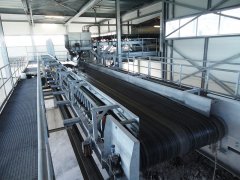
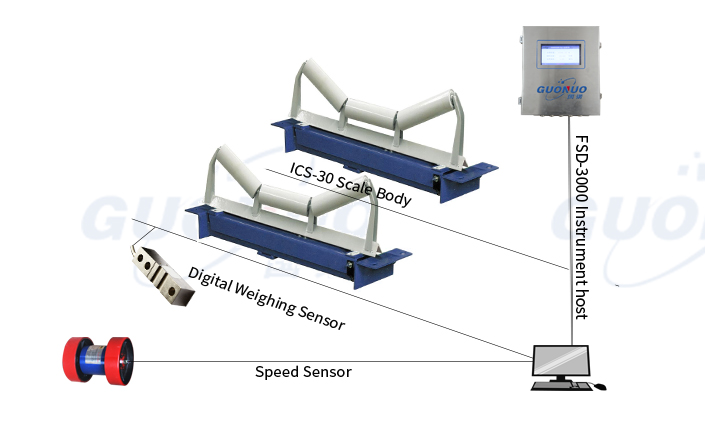
In the process of conveying bulk solid materials on a belt conveyor, the use of electronic belt scales can achieve instantaneous and cumulative flow rates of materials during the conveying process, and the weighing process does not require manual operation and can be automatically and continuously completed, while providing users with measurement data. With this powerful advantage, the application of electronic belt scales has rapidly become popular and has become the mainstream equipment for weighing industrial belt conveyors.
In recent years, with the development and widespread application of technologies such as sensors, computers, and network information, as well as the strengthening of industrial precision management operations, a series of factors have promoted the development of electronic belt scales. Each component of the electronic belt scale has a clear development direction and trend, and Guonuo Technology has always been at the forefront of the development of electronic belt scales. Let me briefly introduce its development points.
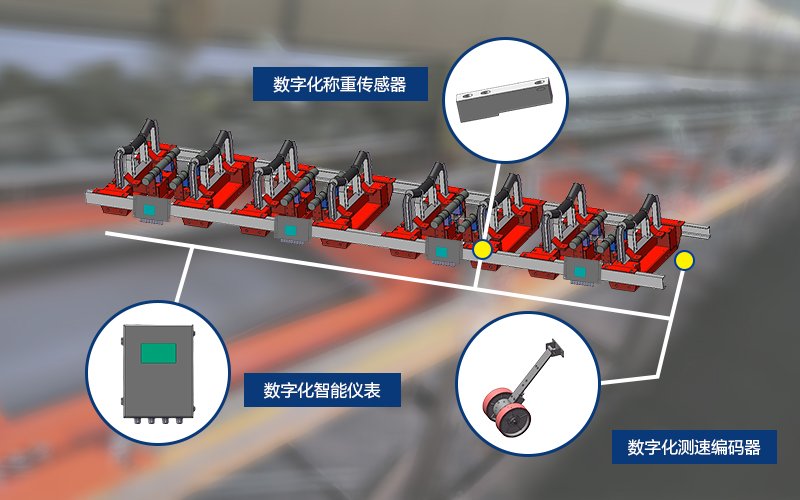
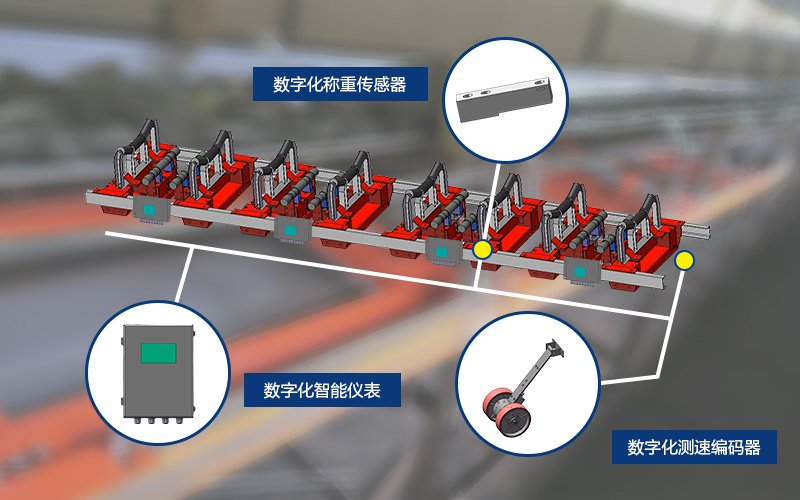
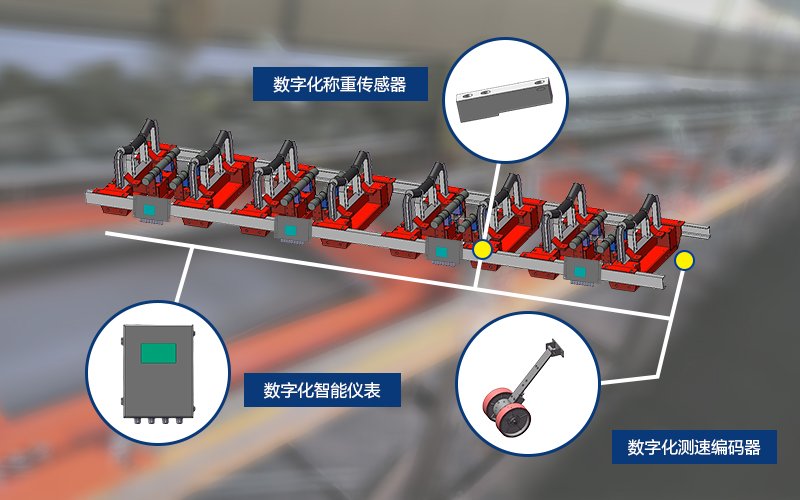
In terms of display instruments, high-performance intelligent instruments have been widely used and gradually become sufficient in industrial control computers. The intelligent instrument has functions such as peeling and online zero adjustment, which makes the zero point of the electronic belt scale stable and the measurement accuracy higher. The instrument also has more intelligent functions, including real-time online monitoring, fault diagnosis, and alarm. One click calibration, hanging code, chain code, and physical verification make the calibration operation of electronic belt scales simpler.
In terms of sensors, sensors with strong overload capacity, high sensitivity, and the ability to operate in harsh working conditions such as high temperature, humidity, and dust for a long time, as well as strong resistance to power interference and vibration interference, are the development trend. In terms of signal types, digital signals are becoming increasingly mainstream compared to analog signals.
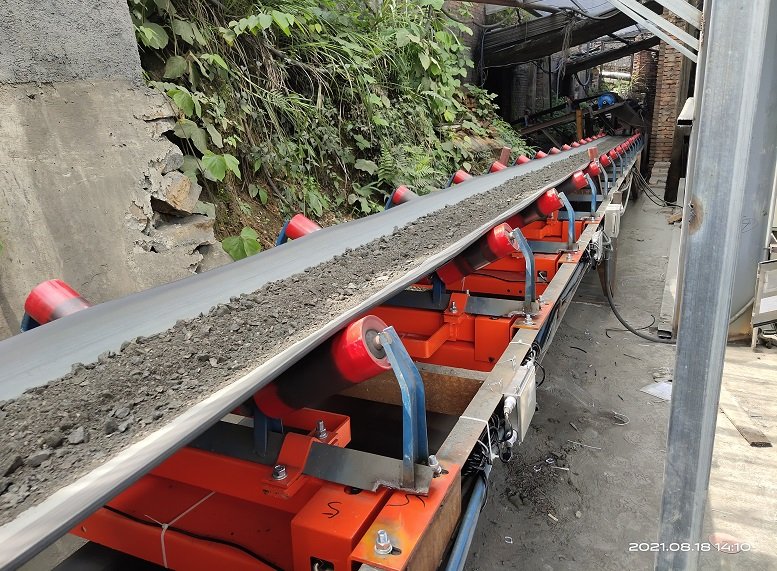
In terms of weighing scales, the combination of multi roller scales and suspended scales is the development trend, with a typical example being the matrix combination structure. Compared with a single roller scale frame, a multi roller scale frame has a longer and more stable weighing area, and its advantages are more obvious. Compared with lever type scale frames, suspended scale frames have less mechanical component impact, lower friction, less loss caused by force transmission, lighter self weight, and higher measurement accuracy.
In terms of inspection methods, for belt scales with large conveying volumes, the calibration equipment for hanging and rolling codes appears a bit cumbersome, and mechanical loading and unloading are often used. The operability of physical verification is not strong, and it is not suitable for many occasions. The electronic calibration method is called a direction, which is simple, has good repeatability, and high accuracy.
In short, each component of the electronic belt scale has made great progress and achieved certain achievements, improving the accuracy and stability of the belt scale, and expanding the application range and occasions of the belt scale. I believe that as belt scale manufacturers continue to research and practice, electronic belt scales will have great development.