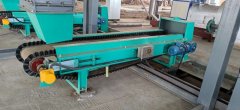
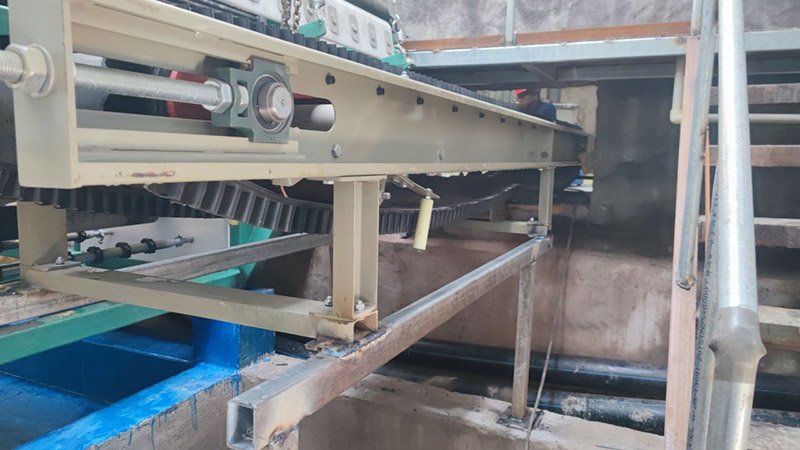
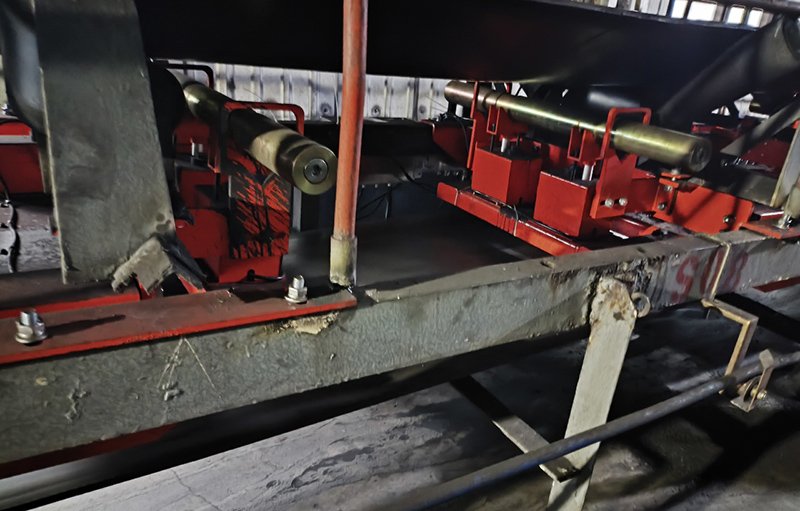
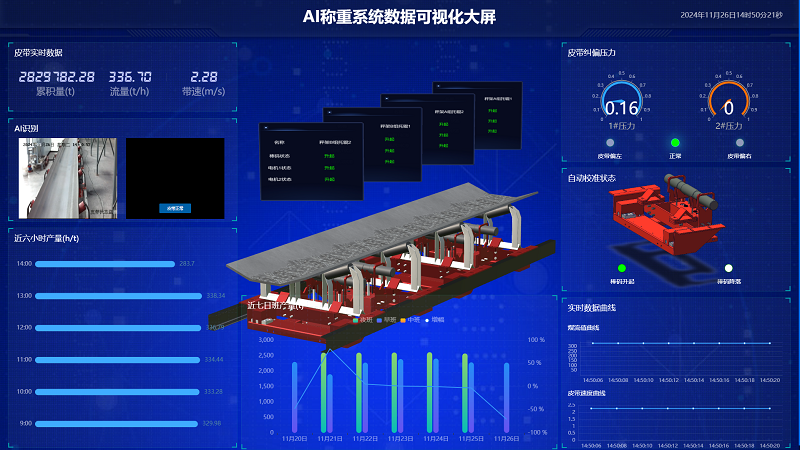
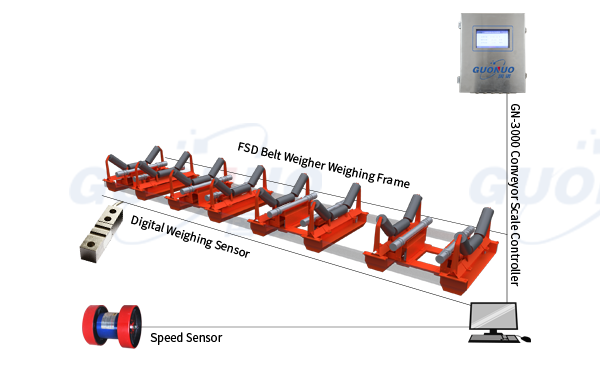
In the field of bulk material continuous conveying and metering, the matrix electronic belt scale, featuring a distributed multi-sensor structure, is regarded as a core equipment for high precision and high reliability measurement. Nevertheless, when operating under complex and variable working conditions, it is frequently affected by belt tension fluctuation, material eccentric loading, mechanical wear, as well as temperature and humidity interference. Consequently, the stability and metering accuracy of matrix belt scales face severe challenges.
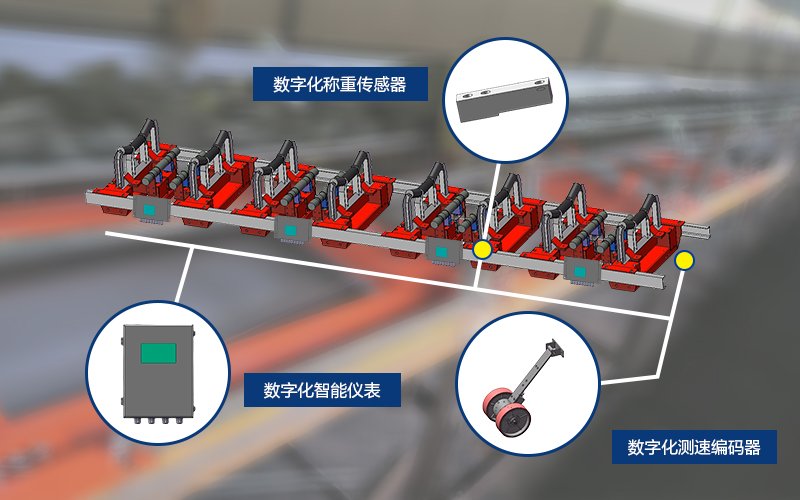
The in-depth integration of AI technology and advanced industrial software is bringing intelligent solutions to matrix electronic belt scales.
Core Empowerment: Synergy Between AI and Industrial Software
1. Intelligent Data Fusion and Dynamic Compensation
Beyond simple averaging: AI algorithms conduct in-depth analysis on massive data streams from multiple weighing units, identifying and quantifying the impact of various interference factors (such as belt deviation, instantaneous material impact, and individual sensor status) on actual material weight.
- Real-time dynamic modeling: Based on historical operating data and real-time working conditions, the AI model continuously learns and dynamically formulates optimal compensation strategies. It realizes high-precision correction of complex nonlinear errors, greatly improving the metering accuracy of instantaneous flow and cumulative throughput.
2. In-depth Operation Perception and Intelligent Early Warning
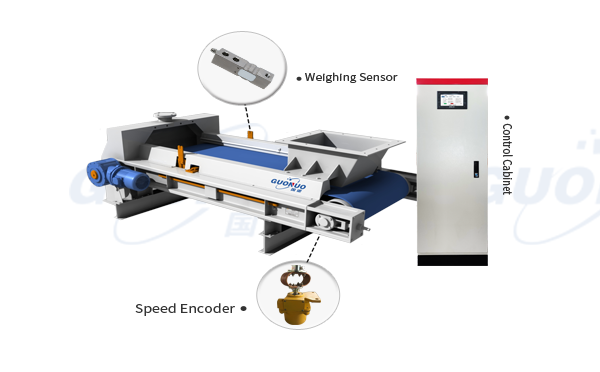
- Feature extraction & equipment health profiling: The industrial software platform integrates multi-source data from weighing sensors, speed sensors, temperature sensors and vibration monitoring modules. Adopting pattern recognition and anomaly detection technologies, AI automatically extracts key operating characteristics of equipment.
- Predictive maintenance: An equipment health assessment model is established to conduct real-time monitoring and early warning for key component abnormalities, including weighing sensor drift, early bearing wear and instrument faults. It transforms passive emergency maintenance into active predictive maintenance, minimizing losses caused by unplanned downtime.
3. Self-optimization and Adaptive Control
- Intelligent parameter tuning: Based on feedback from actual operating performance, AI automatically optimizes core parameters of the belt scale instrument such as automatic zero calibration, enabling adaptive adjustment to changing material flow characteristics and working conditions.
- Enhanced closed-loop calibration: Combined with integrated standard calibration weights and online calibration algorithms of matrix belt scales, AI supports precise and efficient online calibration for the metering system. It intelligently analyzes calibration deviations to provide accurate data for model correction and reduce reliance on manual intervention.
4. Cloud-edge Collaboration and Edge Intelligence
- Industrial software platform as the central hub: The powerful industrial software platform serves as the intelligent core, realizing centralized equipment management, unified data storage, algorithm deployment and upgrading, dynamic equipment display and visual data analysis.
- Edge-cloud collaborative architecture: Time-sensitive real-time analysis tasks such as dynamic compensation are deployed on edge computing nodes to ensure low-latency response. Complex computing tasks including long-term trend prediction and model retraining are processed on the cloud. The platform achieves seamless collaborative management of edge-cloud resources and task workflows.
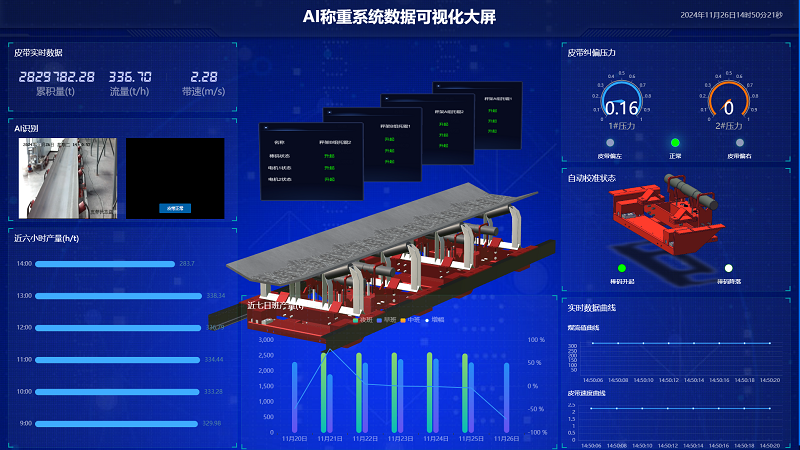
Practical Value of Intelligent Upgrade
- Improved metering accuracy: Effectively overcoming traditional technical bottlenecks, it delivers stable measurement results close to physical calibration accuracy even in harsh working environments.
- Stable and reliable operation: Predictive maintenance greatly reduces unexpected downtime frequency and daily maintenance costs, improving overall equipment efficiency.
- Efficient operation and maintenance: Automatic fault diagnosis, remote monitoring and intelligent report generation reduce manual workload and boost management and decision-making efficiency.
- Data-driven production insights: Accumulated operational big data provides solid support for process optimization, energy consumption management and production quality control.
The deep integration of AI and industrial software platforms upgrades matrix electronic belt scales from simple metering tools into intelligent terminals with independent perception, data analysis, decision-making and self-optimization capabilities.
This technological integration not only solves the long-standing industry pain points of insufficient accuracy and poor stability, but also ushers in a new era of equipment predictive maintenance, automatic parameter optimization and refined production management.