In the cement industry, production is the process of completing a series of processes using various raw materials, including batching. The ingredients are related to the quality and production efficiency of cement, requiring the use of high-performance and automated production equipment for ingredients. Continuous quantitative feeding and stable measurement of various bulk materials in cement production are crucial for the production process and ensuring the quality of the final cement product.
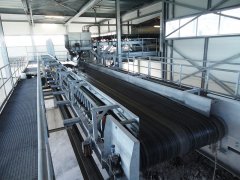
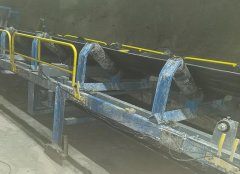
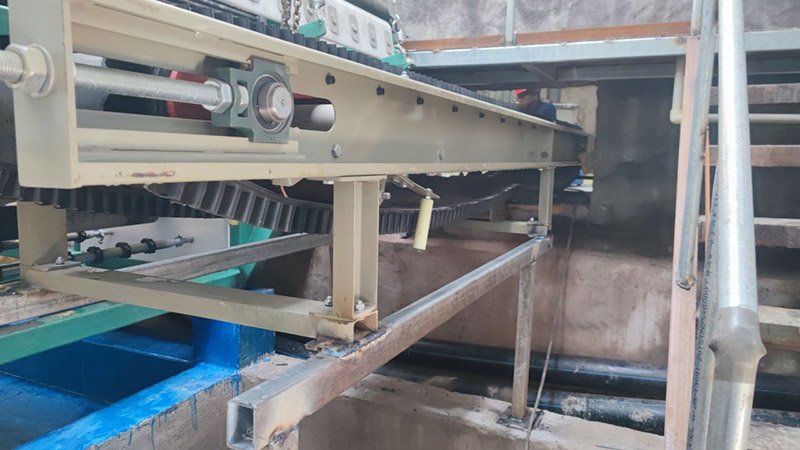
Belt quantitative feeder is a common equipment for process measurement and batching in cement production. It has a high degree of automation, high precision in measurement and control, and helps to improve cement production efficiency and finished product quality.
However, in the actual production process, the operation of the belt quantitative feeder is affected by various factors such as working environment and human operation, which cannot achieve optimal performance, thereby affecting the efficiency and quality of cement production. It is extremely important to choose equipment that is suitable and adaptable to actual production in order to ensure the performance of the belt quantitative feeder in practical applications.
The specific configuration of the belt quantitative feeder, such as bandwidth, length, motor power, etc., is consistent with actual production needs, material characteristics, production capacity, and other factors. The rationality of its configuration is the basic guarantee for normal use in future production.
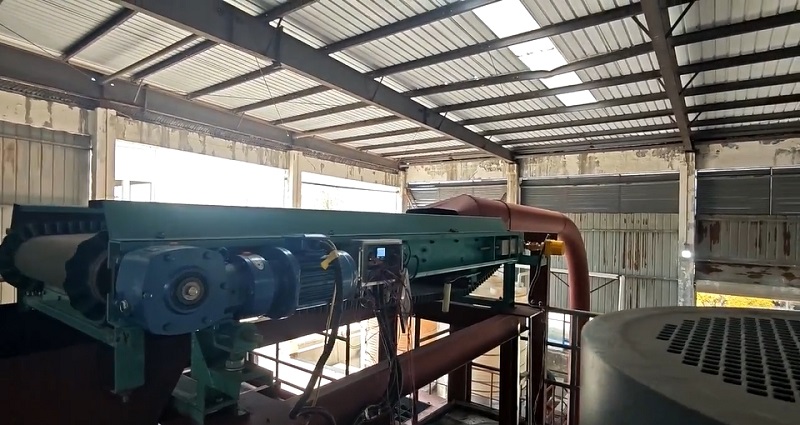
The model composition of the belt quantitative feeder generally includes information such as belt width, drum center distance, hopper form, power, and rated output.
(1) The rated output of a feeder refers to its maximum feeding capacity, which should be determined based on the actual production capacity. If the rated output of the feeder differs too much from the actual production needs, it will lead to a decrease in the adaptability of the feeder's control during actual use, which cannot meet the production requirements.
(2) The actual production capacity and material characteristics determine the belt width of the belt quantitative feeder. Generally speaking, when the process conditions permit, wider belts with slower belt speeds can be selected as much as possible, which is beneficial for achieving higher precision and stability of the feeder. For materials with certain viscosity (such as clay), increasing the width of the belt and reducing the thickness of the material flow can alleviate the situation where the material is prone to intermittent discharge due to viscosity.
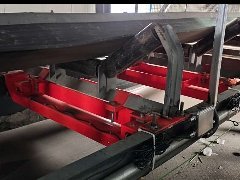
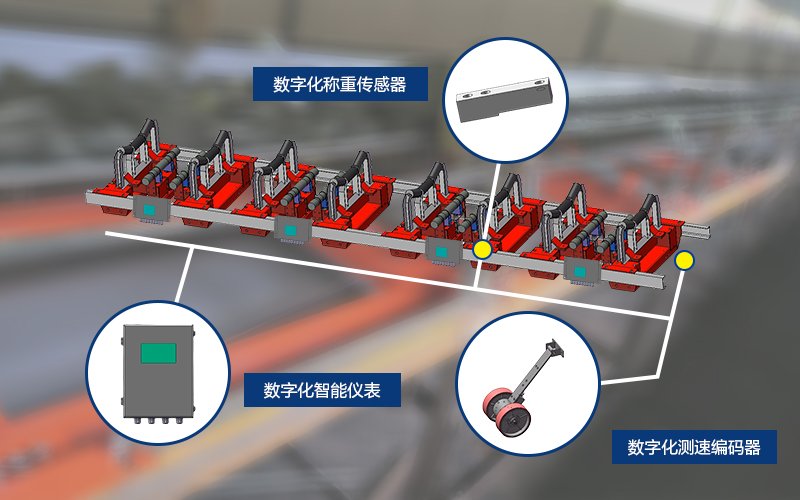
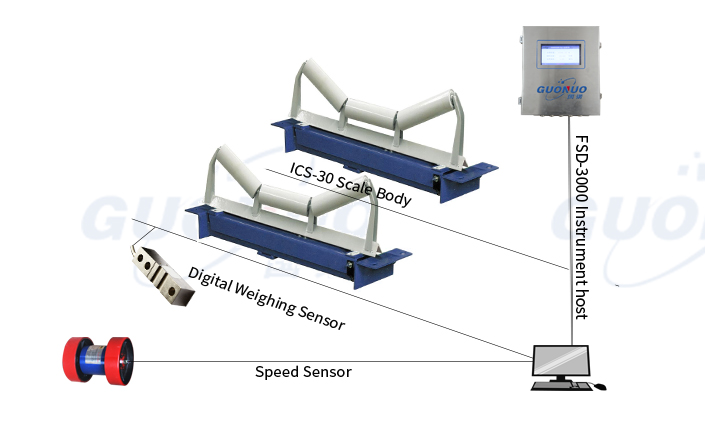
(3) The weighing sensor is the source of weighing signals for the belt quantitative feeder, and its accuracy and stability directly affect the quality of cement ingredients. The range selection of the weighing sensor is related to the application accuracy, and its range is determined by the material flow. It should be maximized to ensure that the weight of the material on the belt is within the optimal force range (20%~80%) of the weighing sensor. The measuring range of the weighing sensor is too small, which can easily overload and cause damage to the sensor; If the range is too large, it will result in a loss of measurement accuracy.
(4) The belt speed of the belt quantitative feeder is determined by a combination of material characteristics, process layout space, mechanical load, and other factors.
(5) After determining the belt width and process layout, the belt length of the belt quantitative feeder can be determined, which is also affected by material characteristics. If the material has a certain degree of fluidity, it can be considered to increase the length of the belt appropriately to slow down the flushing and ensure the stability of the material when passing through the weighing area, which is conducive to improving the accuracy of measurement and detection.
(6) The motor power of the belt quantitative feeder is determined by the comprehensive factors of belt width, belt length, and production capacity.
(7) The belt quantitative feeder also has some other mechanical configurations, such as material blocking plates, automatic cleaning devices, etc., which can also be configured according to process requirements.
For the selection and configuration of the belt quantitative feeder, users need to have a clear understanding of their actual needs and on-site process environment, and provide this information truthfully to the manufacturer. The feeder manufacturer will provide a reasonable solution according to their needs.