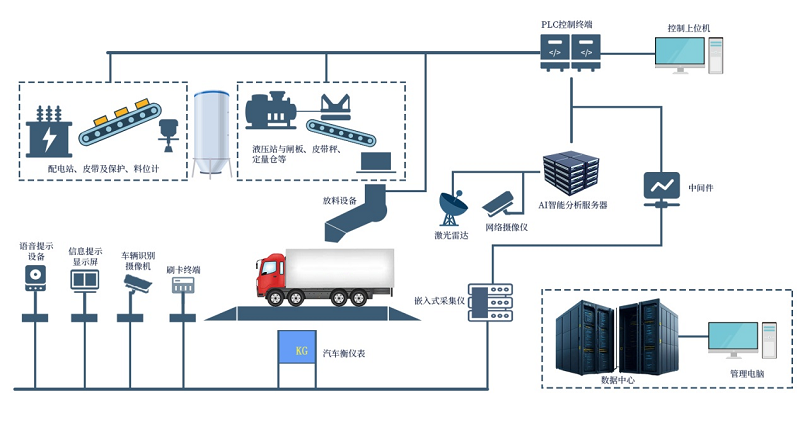
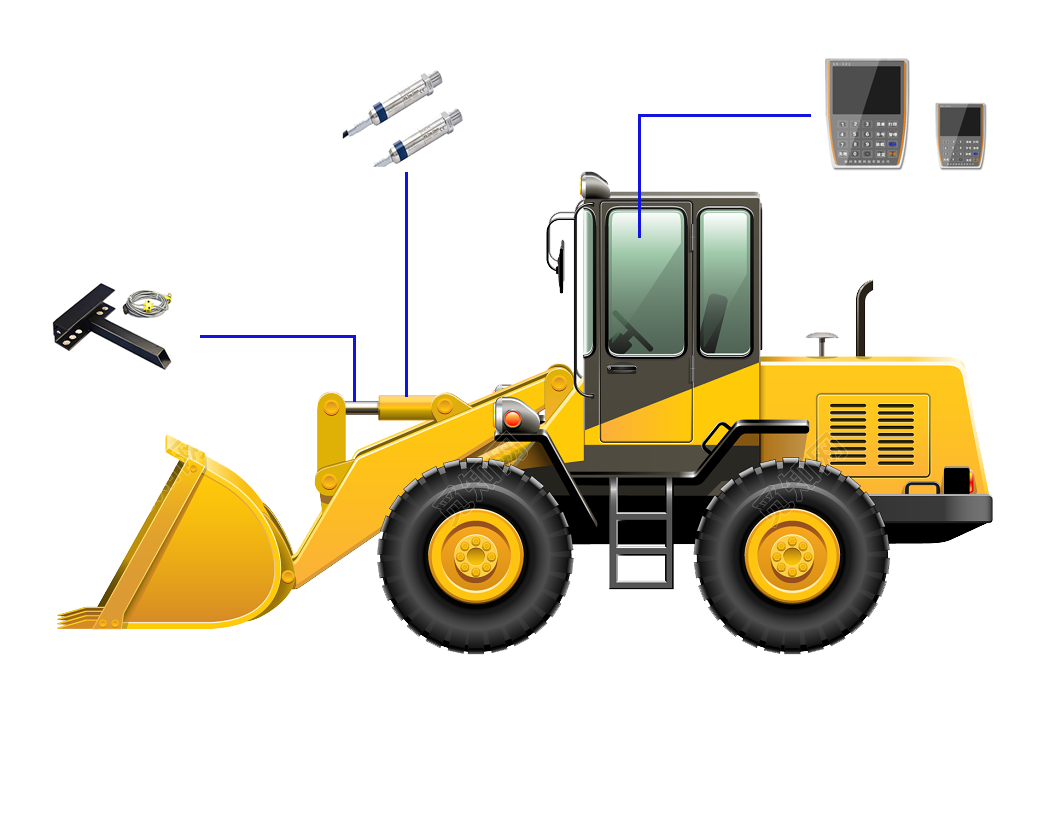
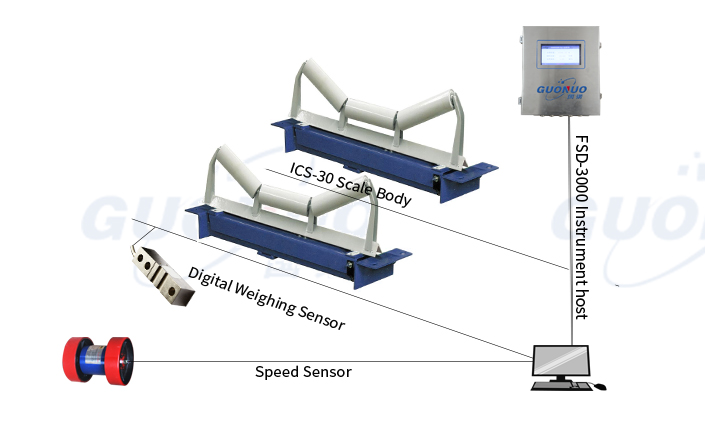
The batching belt scale is widely used in industries such as cement and chemical engineering. It continuously transports bulk materials with a constant feed flow rate and achieves functions such as automatic metering and quantitative feeding. The accuracy and stability of the ingredient belt scale have a crucial impact on the efficiency and quality of ingredient production, therefore, improving its accuracy, reliability, and stability is very important.
Guonuo Technology has summarized some measures and methods to improve the accuracy and stability of the batching belt scale based on rich practical application case experience and relevant knowledge, for reference in the actual application process.
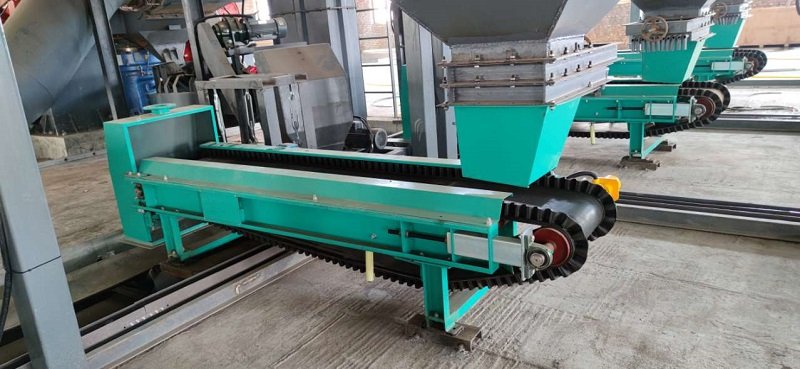
1. Reduce the impact of belt wear on measurement
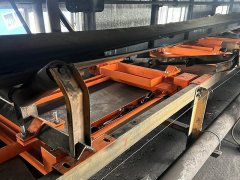
The batching belt scale is applied in working environments, and many materials have high hardness, which can wear the belt or tear at the positions of the two sides of the hopper, affecting both the service life of the equipment and the accuracy. During use, attention should be paid to the discharge of materials, reducing the impact of warehouse pressure on belt weighing, and minimizing the impact of materials on the belt, so that materials can pass evenly and stably.
2. Reduce the impact of environmental factors
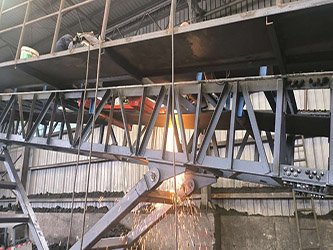
(1) Reduce the vibration of the belt support frame, reinforce the brackets around the belt scale frame, and increase the number of belt bracket feet to achieve the goal of reducing vibration.
(2) The batching belt scale should be based on electrical equipment such as frequency converters as much as possible. The weighing sensor cable should be shielded and reliably grounded to avoid cable breakage and effectively reduce electromagnetic interference.
(3) The weighing sensor should have a shell protection device and apply temperature compensation and other technologies to reduce the impact of temperature changes on the weight, prevent dust from entering the interior of the sensor, and maintain the accuracy and stability of the sensor.
(4) All electrical connections of the instrument should be tightened, and measures such as dust and moisture prevention should be taken.
3. Prevent belt deviation
Belt deviation has always been an important factor affecting the measurement effect of belt scales, and belt deviation can cause zero drift. To prevent belt deviation, correction devices can be installed on both sides of the belt to adjust it in a timely manner.
4. Reduce speed measurement errors
The speed deviation of the belt scale is generally caused by the following reasons: adhesive material on the inner surface of the belt, damage to the belt joint, shaking during the movement of the belt, encoder failure, loosening of the encoder coupling, and changes in the length of the belt. To avoid the above problems, it is necessary to strengthen the cleaning work of the belt scale support roller and the head and tail wheels, prevent sticking materials, replace the belt in a timely manner if it is damaged, and regularly check and tighten the speed encoder.
5. Use appropriate methods for calibration
The ingredient belt scale needs to be calibrated regularly, and different calibration methods can achieve different levels of accuracy. The accuracy of physical calibration is high, but the workload is large, the operation is difficult, and even some environments cannot meet the requirements of physical calibration; Chain code calibration can simulate the actual material flow with high calibration accuracy. In cases where physical verification is not possible, this calibration method can be chosen; Weight verification is simple and easy to operate, but the error is large.
6. Perform daily maintenance well
In addition to the above situations, the daily maintenance points of the ingredient belt scale are equally important, including: cleaning the scale body, not deforming, and ensuring that the bolts are not loose; The rollers operate flexibly and the bearings are well lubricated; The weighing sensor has no foreign object jamming, and the force transmission mechanism is not misaligned; The speed sensor is securely fixed, and the encoder is not loose, deformed, or swinging; The junction box is well sealed and the wiring is securely fastened; The instrument function is normal and can be operated normally.