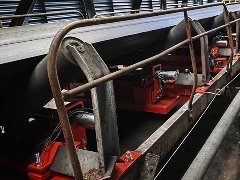
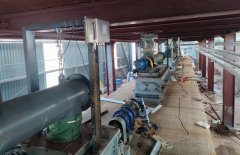
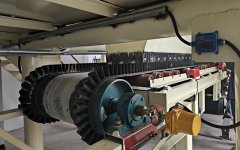
In modern industrial production, logistics, and port trade industries, bulk bulk materials are one of the common tasks that require weighing and measurement. These materials are often weighed using belt conveyors, and belt scales have naturally become practical, convenient, efficient, and widely used automatic measuring instruments.
However, in the application process, belt scales are inevitably affected by their own principles, characteristics, and working conditions, resulting in some problems:
(1) The measurement of belt scales is easily affected by factors such as belt tension and surrounding mechanical vibration, which leads to low measurement accuracy and poor long-term stability;
(2) The installation and maintenance requirements are high, and the maintenance workload is large. The installation position and the height of each roller must be consistent. Adhesive materials, roller wear, and other factors can have a significant impact on the measurement, thus increasing the maintenance workload;
(3) An effective way to maintain the accuracy of the belt scale is to regularly perform accurate calibration, especially physical calibration, to inspect and correct the belt scale. However, due to practical production situations, calibration and verification processes, calibration work, especially physical calibration, cannot be operated frequently.
That is to say, belt scales have their own advantages in the past, but they also have significant limitations in practical applications. Many situations with harsh working conditions and high measurement accuracy requirements cannot meet the application requirements.
For example, the measurement of coal entering the furnace in thermal power plants, the measurement of raw materials in coking and metallurgical plants, and port trade settlement often involve economic accounting, sales trade, production regulation, etc., which directly affect the economic benefits of enterprises.
So, if a belt scale can solve the problems of traditional belt scales and meet the application requirements of high-precision and long-term strong stability for enterprises, wouldn't all problems be easily solved?
The matrix belt scale was born from its application, and it is a belt scale that truly solves the problems of low measurement accuracy, poor long-term stability, and high installation and maintenance requirements of previous belt scales. It can meet the high-precision measurement requirements of industrial production, trade settlement, and other fields.
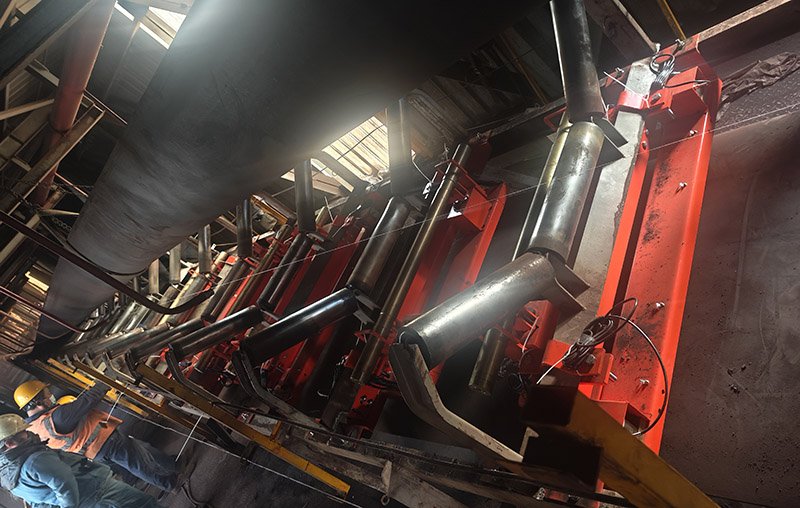
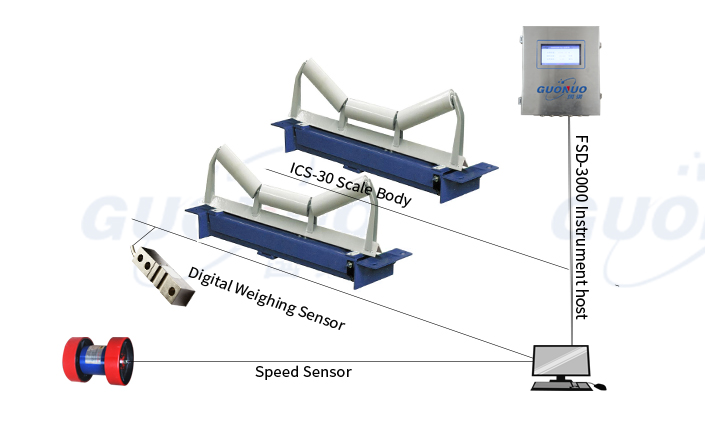
What is a matrix belt scale? Firstly, the matrix belt scale has overturned the traditional belt scale in terms of design concept. It abandons the components such as crossbeam, lever, and spring of the previous belt scale, and adopts a high-precision weighing sensor structure with two sets of rollers suspended to directly transmit force.
It is a weighing unit, and multiple weighing units are arranged and combined according to mathematical models and installed on the belt conveyor. The weighing units are independent of each other, and a dedicated mathematical model is used to calculate and compare the weight detected between the weighing units, automatically correcting the impact of belt tension changes on measurement.
Based on advanced design concepts and a new structural form, the matrix belt scale has demonstrated unique advantages in practical applications
(1) High measurement accuracy and good long-term stability
The anti-interference ability of the scale frame structure is enhanced, and the measurement process is almost no longer affected by changes in belt tension; Digital weighing sensors have greatly improved anti-interference performance while having high sensitivity, and electromagnetic factors in the environment cannot affect the transmission of signals; The self mechanical components are simplified, and it is difficult for dust and adhesive materials to affect weighing. The matrix belt scale can reach heights that traditional belt scales cannot reach, and can even maintain a stable 0.2% for a long time.
(2) Reduced installation requirements and stronger adaptability
The combination of weighing units without large crossbeams is lightweight, with fewer mechanical components, and can be installed without the need for lifting machinery. The matrix belt scale can easily adapt to working environments with large inclination angles and high dust accumulation that belt scales cannot adapt to in the past.
(3) Easy and convenient operation, simple calibration and verification
Even in dusty environments, matrix belt scales rarely accumulate dust, greatly reducing daily maintenance and operation work. Intelligent instruments also have functions such as online zero adjustment, interval value adjustment, and one click calibration, which can maintain stable accuracy without frequent calibration and verification, and the calibration and verification operations are simplified.