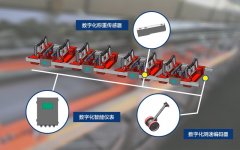
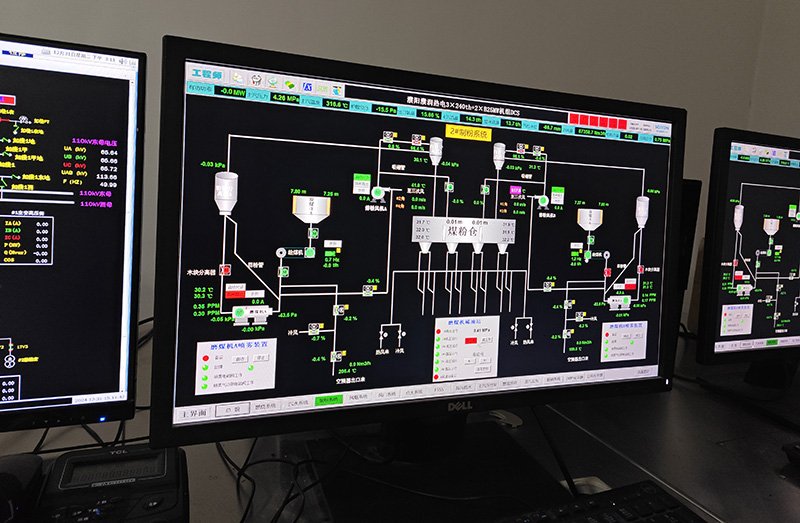
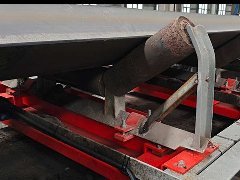
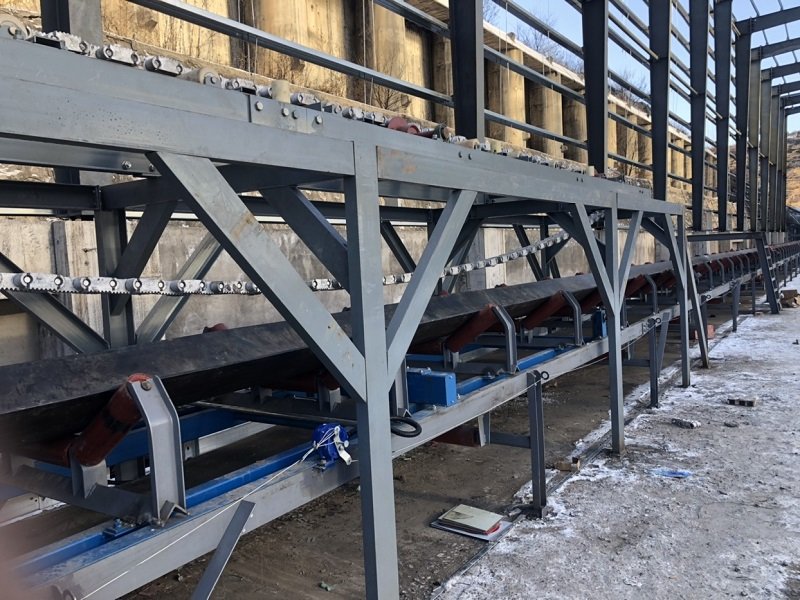
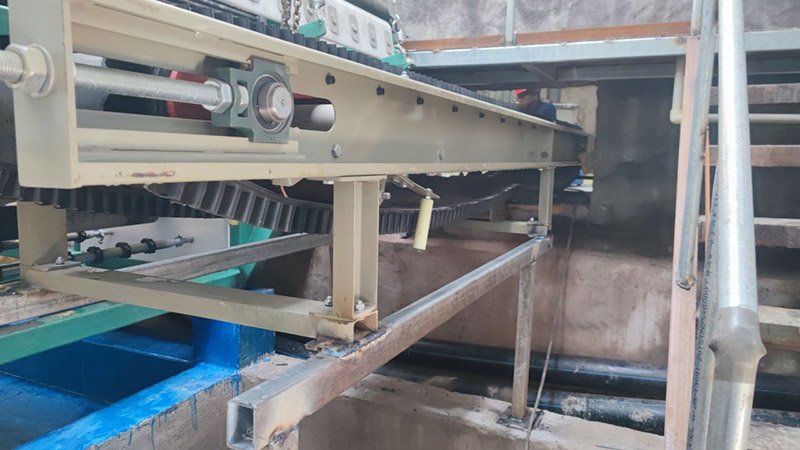
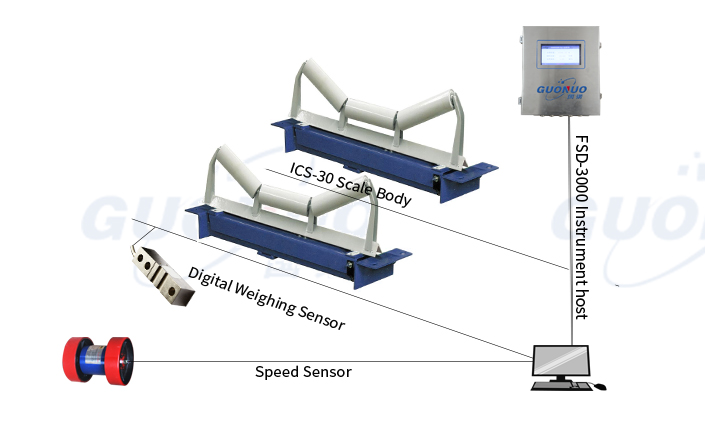
Electronic belt scale is a dynamic measuring instrument applied to belt conveyors. It can dynamically measure materials passing through the conveyor during operation and is widely used for bulk material measurement in various occasions.
Due to the unpredictable working environment and high sensitivity of electronic belt scales, their measurement accuracy is easily affected by environmental factors during application, resulting in inaccurate measurements. If you want the electronic belt scale to maintain stability, it must be installed correctly, which is the key to maintaining accuracy and stability during application.
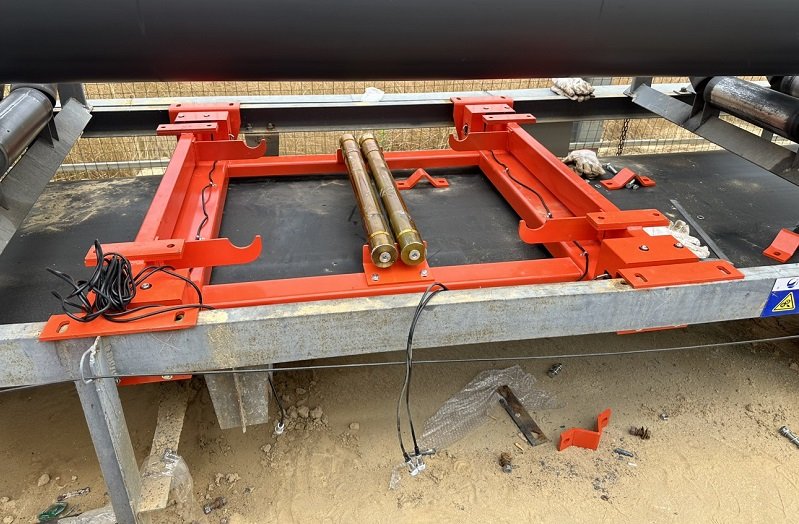
1. Avoid the influence of weather factors
Adverse weather conditions such as wind and rain can affect the measurement of electronic belt scales. During installation, attention should be paid to the impact of weather conditions and installation should be carried out indoors as much as possible. If it is necessary to install outdoors, protective devices should be installed carefully.
2. Conveyor bracket
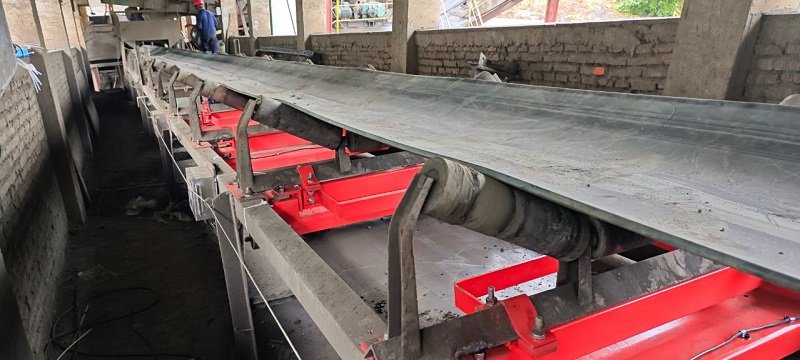
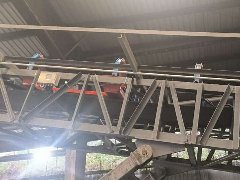
The electronic belt scale is installed on the belt conveyor, and the stability of the conveyor affects the operation of the belt scale. The longitudinal beams of the conveyor supporting four sets of rollers in front and behind the belt scale should have sufficient rigidity. The installation of the belt scale should not feed, and the conveyor should not have expansion, joints, or longitudinal beam splicing.
3. Selection of installation location
The electronic belt scale must be installed in a suitable position, which is the foundation for subsequent installation, debugging, and application. The selection of the position must follow the following rules:
(1) Belt scales should be installed in places where the tension and tension changes of the conveyor are small, usually at the tail end of the conveyor;
(2) The weighing roller should be installed at a distance of not less than 5 meters from the loading point, and attention should be paid to the distance between the tail feeding baffle and the roller, which should not be less than three rollers, to reduce the influence of the feeding baffle or the material inside in contact with the belt;
(3) The belt scale should be located too close to the feeder, discharge port, and transfer plate, preferably more than 3 meters, to prevent materials from being directly flushed through the weighing area of the belt scale;
(4) Belt scales should not be installed in areas where the conveyor slides due to overspeed or tilting, and should be selected in areas where the conveyor is relatively flat;
(5) The belt scale cannot be installed on the conveyor of the movable unloader;
(6) In industrial settings, there are often large mechanical equipment with obvious vibrations. Belt scales should be installed as far away from the vibration source as possible, and conveyors should not be equipped with vibration devices;
(7) For belts with concave segments, the belt scale must be installed on the straight segment, and the curved part of the concave segment should be at a certain distance from the belt scale; For belts with convex sections, it is best to install the belt scale on the straight section. If it must be installed on the convex section, the arc section must be at a distance of 6 meters or five times the distance between the weighing rollers.
4. Requirements for belt conveyors
The electronic belt scale must be installed on a suitable belt conveyor in order to work stably. The requirements for belt conveyors are:
(1) The belt conveyor should have only one loading point to ensure constant belt tension during the loading process;
(2) Different types of electronic belt scales are suitable for different conveyor inclination angles. Conveyors with larger inclination angles may cause material to slide down, affecting measurement;
(3) If necessary, install a heavy hammer tensioning device on the belt conveyor to maintain constant belt tension;
(4) The groove angle of the belt should be less than 35 °, preferably a flat roller, to ensure good contact between the belt and all weighing rollers when the belt is unloaded.
The above is a compilation of technical and practical experience, as well as relevant knowledge materials by Guonuo. Of course, for the installation of electronic belt scales, Guonuo will provide on-site guidance, installation, and debugging services to ensure that the accuracy and stability of the belt scale application meet the requirements.