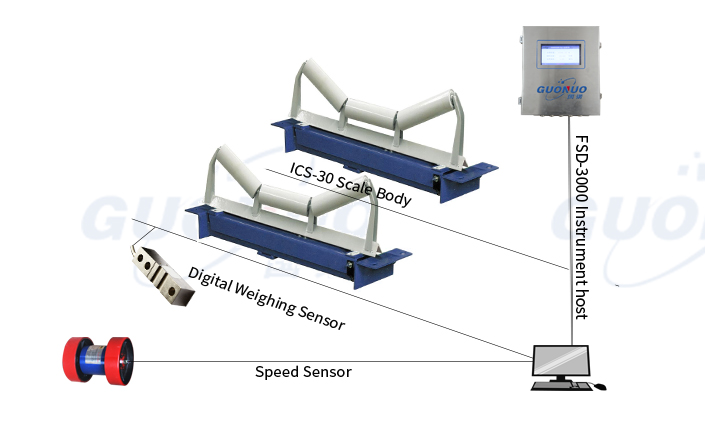
In industrial production, several types of bulk materials are involved in batching operations. Quantitative weighing batching machines are important equipment for completing bulk material batching, which can help enterprises achieve accurate material proportioning, thereby improving production efficiency and product quality. It can be seen from this that the stable and reliable performance of quantitative weighing ingredients is of great significance for production.
However, in practical applications, quantitative weighing and batching machines are often affected by various factors such as their own technology and quality, application environment, and human operation, resulting in unsatisfactory performance. For example, the accuracy of batching cannot be guaranteed, and long-term stable operation cannot be maintained. In order to further improve the application performance of quantitative weighing and batching machines, Guonuo Technology, as a manufacturer with rich application technology and practical cases, has summarized some experiences and measures to optimize the functions and performance of quantitative weighing and batching machines.
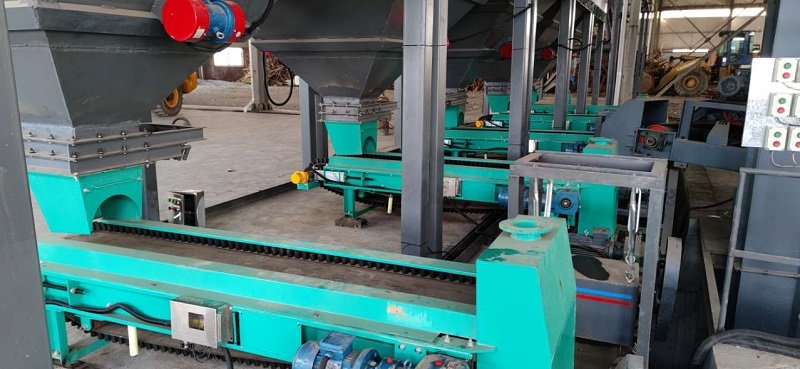
Manufacturers can take the following measures in terms of products and technology to improve the application performance of quantitative weighing and batching machines:
1. Improve the accuracy and anti-interference ability of weighing sensors
The weighing core component of the quantitative weighing batching machine is the weighing sensor, so the performance, accuracy, sensitivity, and anti-interference ability of the weighing sensor are extremely important. Manufacturers should focus on improving the accuracy, anti-interference ability, environmental adaptability, stability, protection level and other comprehensive performance of weighing sensors, optimize the weighing signal, and ensure that the signal accuracy and transmission process are not affected by interference. At the same time, optimize the sensor structure and manufacturing process to ensure the continuous stability of weighing accuracy.
2. Improve the accuracy and stability of the control system
The control system of the quantitative weighing batching machine is crucial for achieving accurate batching. Manufacturers need to continuously optimize control algorithms and improve control equipment to enhance the accuracy and stability of the control system. In addition, adopting advanced automation technologies such as closed-loop control and feedback control can better control the batching process, reduce errors and fluctuations.
3. Optimize material supply system and structural design
The design of the material supply system directly affects the application performance of the quantitative weighing and batching machine. Manufacturers should design a reasonable material supply system to ensure smooth and stable entry of materials into the batching machine. At the same time, based on specific material characteristics, optimize structural design, reduce material adhesion and accumulation, and improve batching accuracy and efficiency.
4. Introduce intelligent monitoring and adjustment functions
Introducing intelligent monitoring and adjustment functions can improve the application performance of quantitative weighing and batching machines. By real-time monitoring of weighing and measuring data and the batching process, parameters can be automatically adjusted online to improve the accuracy and stability of the batching process. In addition, by combining artificial intelligence and big data analysis technology, in-depth analysis of historical data is conducted to optimize formulas and process parameters, further improving application performance.
Finally, in addition to product technology applications, manufacturers of quantitative weighing and batching machines should also provide professional and comprehensive after-sales services to ensure the application performance of the equipment. If the equipment cannot be installed and debugged correctly and reasonably, the actual application cannot achieve the desired effect.
Manufacturers should arrange experienced after-sales engineers to the user's production site for installation and debugging work, ensuring that the quantitative weighing and batching machine is installed scientifically, correctly, and reasonably, and undergoes actual production experiments to ensure accuracy. At the same time, the manufacturer's after-sales engineers also need to provide training to users to avoid human error affecting the performance of the quantitative weighing and batching machine after leaving the site.
In summary, in order to improve the application performance of quantitative weighing and batching machines, manufacturers can take a series of measures, including improving the quality and performance of components including sensors, improving control systems, optimizing material supply systems and structural designs, and introducing intelligent monitoring and adjustment functions. At the same time, the manufacturer should also provide comprehensive after-sales service to avoid installation, debugging, and human operation affecting the application performance of the batching machine.